
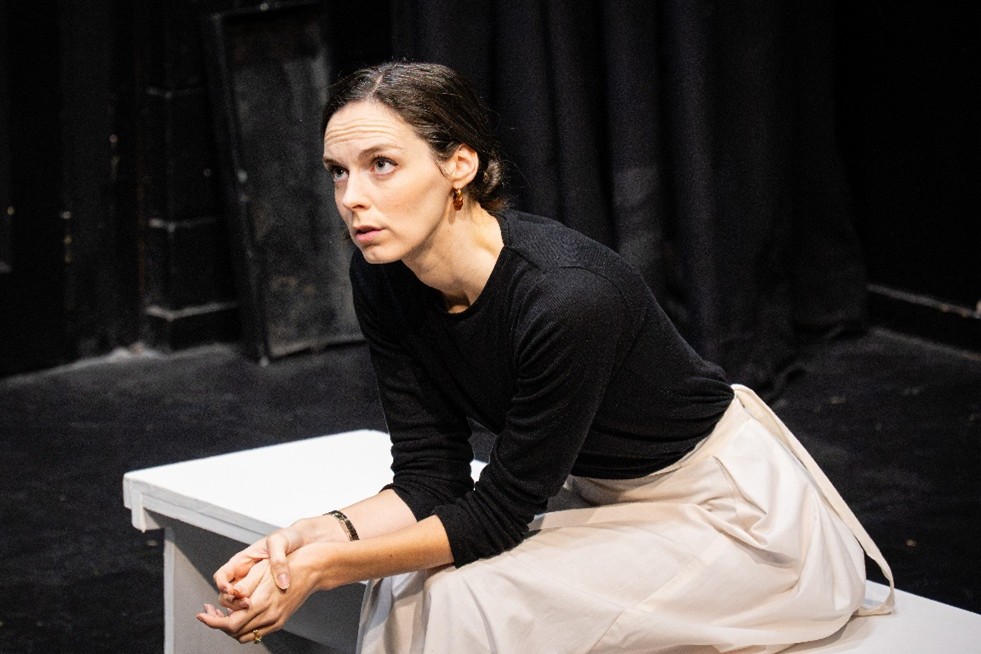
Birmingham’s Crescent Theatre’s production of “Hedda Gabler” opens on 18th October and runs until 25th October.
When talk turns to major female roles in theatre, Hedda Gabler is always amongst the top names. The title role of Henrik Ibsen’s 19th century classic, Hedda is most often compared to one of Shakespeare’s most famous protagonists.
‘The comparisons people tend to make when talking about Hedda Gabler is with Hamlet,’ says Andrew Cowie, director of The Crescent Theatre’s new production of Hedda Gabler. ‘We see both Hedda and Hamlet working through a moral dilemma, neither of which have a right or wrong answer. People often say, ‘Is Hedda likeable?’ Well, you don’t ask if Hamlet is a likeable character! It’s about seeing these two characters working through their dilemmas, not whether you’re meant to like them or not.’
Hedda Gabler is often cited as one of the first feminist pieces of theatre, giving audiences of the time a complex and fascinating female lead, one both seductive and spiteful. First performed in 1891, we first meet Hedda (Grace Cheatle) just as she’s returned from honeymoon with her new husband George Tesman (Jack Hobbis). Struggling with a life devoid of excitement, she strives to find a way to fulfil her desires by manipulating those around her. Here is a woman who will set the world on fire just to watch it burn.
‘The play is still being performed today because it’s so relevant,’ says Cowie, who is directing Patrick Marber’s 2016 update on the original text. ‘Hedda has opted for a safe option. She knows that she’ll have a home, an income, a husband who adores her…but at what cost? Then an old lover comes into her life, and he’s a reminder that she was more ambitious for herself, and that maybe if she had taken a risk, perhaps her life could have been more rewarding. That idea of ‘Do I settle or do I take a risk? … I think anybody can identify with that.’
And what does Cowie make of the age-old question that often gets asked about Hedda’s character – whether she’s a villain or a victim?
‘I wouldn’t reduce it to just villain or victim. The question about Hedda is whether the world she’s in is perfectly fine and normal and she’s the misfit, or is Hedda the normal person and it’s the world she’s in that’s problematic? Hedda is the person audiences connect with on stage. It’s a critique of the circumstances she finds herself in. It’s really about making choices about how you live your life.’
There are still some tickets available, either through the Crescent’s Box Office on 0121 643 5858 or its website: www.crescent-theatre.co.uk