
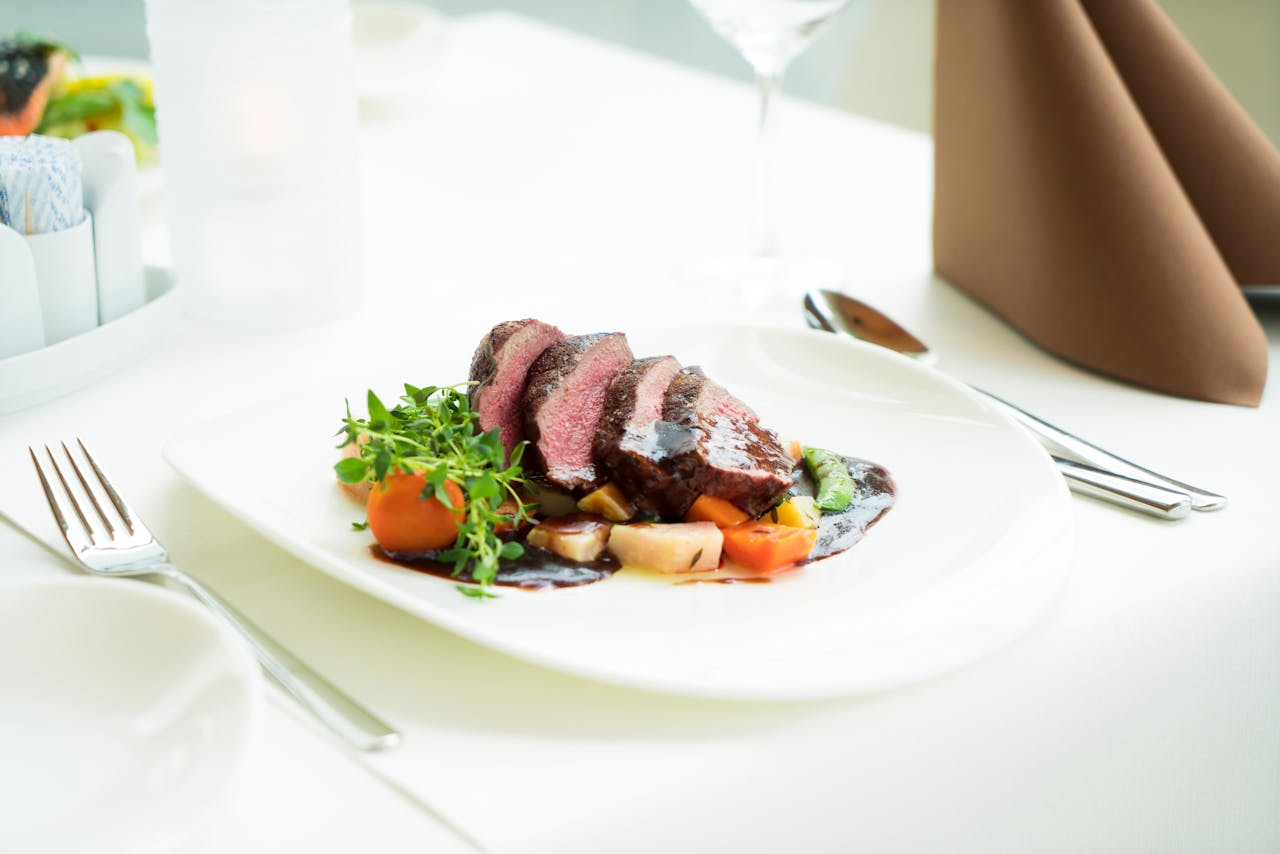
Photo by Terje Sollie
Ever ordered a meal that tasted great but looked like it had barely survived a food fight? No matter how much we say we’re “not picky,” looks matter—especially at the table. From casual brunches to plated dinners, presentation doesn’t just dress up the food. It sets the tone, shapes expectation, and turns a simple meal into a full experience. In this blog, we will share how visual details elevate dining and why they’re worth the attention.
The Look of Hospitality Starts Before the First Bite
People eat with their eyes before their mouths ever get involved. It’s why restaurant plating matters, why cutlery gets polished, and why the right napkin fold makes a difference even at a weekday lunch. In a time when nearly every meal gets photographed before it’s touched, presentation isn’t an afterthought—it’s the front door to the whole experience.
Even behind-the-scenes service is now expected to match the front-of-house standard. Linen, in particular, plays a quiet but powerful role in this setup. If you’re working within a venue that hosts events or regular service like a clubhouse or golf course, there’s a certain rhythm to setting up, resetting, and making everything feel polished each time. For that kind of consistency, Country club linen rentals offer an efficient and elevated solution. The team at Bergen Linen, for instance, handles each piece with a level of care that reflects the precision diners expect—items are inspected and pressed before they even arrive at your door.
It’s not about overdoing anything. It’s about creating a setting where everything feels considered. A place where guests can focus on the conversation or the course in front of them, without distraction from a wrinkled tablecloth or mismatched settings. In settings like country clubs where both form and function matter, these behind-the-scenes choices subtly drive the overall impression. They become part of the experience without demanding attention.
Modern Dining Is All About Atmosphere
Today’s diners aren’t just looking for good food. They’re chasing a feeling. Something that cuts through the routine and gives them a sense of occasion—even on a Tuesday. Restaurants know this. So do private venues, hotels, and pop-up chefs. It’s why lighting is warmer, table settings cleaner, and menus designed to be just as photogenic as the plates they’re printed for.
Even the smallest cues play a role. A clean fold in a napkin can signal attention to detail. A fresh tablecloth resets the mood. Coordinated linens and serving ware turn a table into a stage, setting the scene for the food to do its part. The actual meal may be the star, but the rest of the table acts as the supporting cast, helping each dish land the way it was meant to.
At a time when more meals are shared online than ever before, the stakes for presentation keep rising. One messy setup can undo an otherwise beautiful menu. On the other hand, when the whole scene comes together—the plates, the linens, the arrangement—it doesn’t just get noticed. It gets remembered.
Presentation Reflects Intent—and People Feel That
Guests notice when things are done with care, even if they can’t pinpoint why it feels right. Clean lines, matched textures, and consistent color palettes tell people something before the food even shows up: someone thought about this. Someone didn’t just throw things together. That level of intent earns trust.
And trust matters in dining. It’s the difference between a meal that’s just fine and one that feels special. Between a client who shows up for a meeting and one who stays for dessert. It’s why the best venues and hosts don’t settle for “good enough.” They aim for easy elegance—something that feels effortless but took real work behind the scenes.
That doesn’t always mean expensive materials or over-the-top design. It means quality that holds up, details that don’t distract, and materials that match the tone of the event. A spring luncheon looks and feels different than an autumn tasting menu.
Presentation Isn’t Decoration. It’s Strategy.
Great presentation doesn’t add noise. It quiets it. It draws attention to what matters and removes the distractions. It makes every meal feel deliberate, every event feel intentional. It’s not about impressing anyone—it’s about creating a consistent, elevated experience that builds trust the moment someone sits down.
Even the most minimal setups rely on thoughtful choices. Every texture, every fold, every visual detail contributes to the sense that something is being done right. And in a business where first impressions set the tone for everything that follows, doing things right quietly is often the most powerful move you can make.