
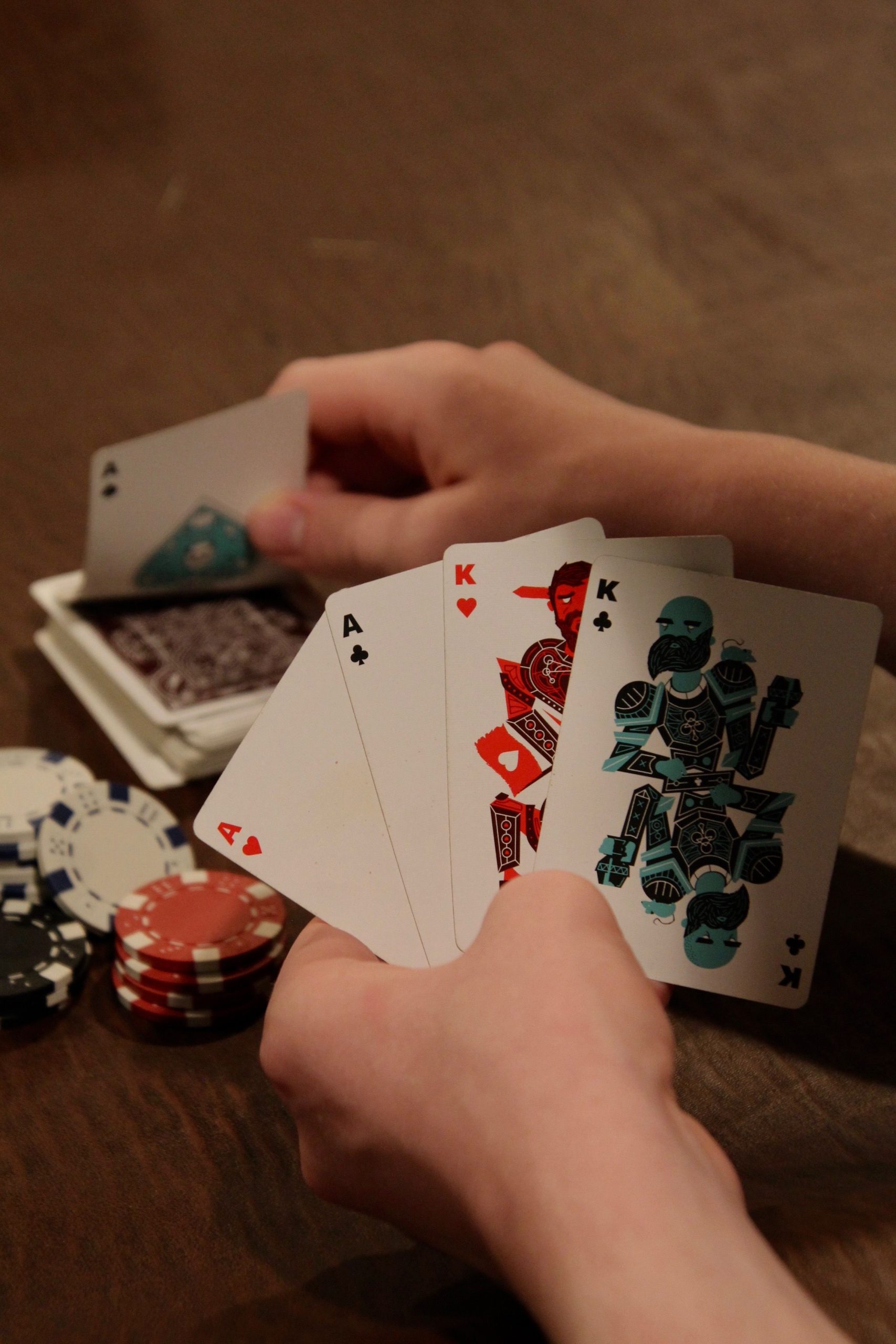
Source: pexels.com
From the haze of back rooms in old pubs to the glow of your phone screen, the card games your grandma taught you are still alive and well. They’re just easier to carry around now, tucked away in your pocket instead of a battered cardboard box.
There’s something kind of soothing about shuffling a deck, too; fifty-two little cards in four suits, packed full of history and still one of the simplest ways to fill a long night. If you wander into a Birmingham pub on any random Tuesday, don’t be surprised if you spot someone with a pack of cards: Maybe a relaxed game of rummy over in Wellington’s corner, or a tense hand of whist at a social club in Kings Heath. But these days, the same games are just as likely to show up on a phone as on a worn-down table, and the way we play has shifted without anyone really making a fuss about it.
Card games refuse to fade away. With every new entertainment fad, from arcade cabinets and video consoles to non-stop streaming, people kept predicting their extinction. Instead, they just found new places to live. Solitaire wove itself into office life as far back as Windows 3.0, and it’s never left. Poker roared back to life on laptops during the 2000s. These days, you’ll find blackjack, bridge, rummy and an endless parade of local games rebuilt as apps, browser games and even full-blown online communities. This whole trend begs a closer look: Which old favourites made the jump most easily? What changes when the whole thing turns digital? And what, if anything, do we lose along the way?
Blackjack kept its simplicity and gained an audience
If any game crossed over seamlessly, it’s blackjack. The rules are simple: Get closer to 21 than the dealer, don’t go over, end of story. That clarity makes it perfect for a screen; not much lost, none of that fun or tension left behind. It’s one of those classic casino games that everyone recognises, whether or not they’ve set foot in a real casino, thanks to countless movie scenes.
Gambling regulators in Britain watch all this closely. Their latest data says about 39% of adults played some form of online gambling last month. Take out the lottery-only crowd, and you’re still left with 16%; proof how common online play has become right alongside old-school betting. If you’re in Birmingham and want a blackjack hand but don’t fancy the city centre, places like Pub Casino make it dead simple. You can play online blackjack at Pub Casino, but they also offer slots, table games, live dealers and quick payment options, so you can dive into online blackjack and have a virtual dealer and deck waiting within seconds of opening the page.
Solitaire never actually went anywhere
If any game proves technology can’t kill tradition, it’s solitaire. Microsoft first bundled it with Windows back in 1990, supposedly to teach people how to use a mouse, and somehow it became one of the most-played pieces of software on the planet. In 2025, solitaire hit its 35th anniversary, and instead of being a dusty relic, the stats are mind-blowing: About 100 million hands get played globally every day, a pace that’s held steady through the 2020s. This isn’t some retro novelty; it’s a daily habit for millions, whether riding the bus, waiting for the kettle or tuning out during a boring meeting.
The real magic of solitaire is that you never needed anyone else; no chatting, no audience and no pressure. No flashy graphics either. It’s just you, the cards and the rules. According to YouGov, it’s still the most-played card game among American adults, with nearly everyone having tried it at some point; more than go fish or blackjack, according to a big 2023 survey. Once a game gets that popular, going digital barely changes what you’re doing.
Poker’s online boom just keeps growing
Poker’s route was very different. It grew up as a social game; reading faces, bluffing and listening to the noise and drama of a table. It felt like the least likely game to fit on a screen. Turns out, people were dead wrong. The World Series of Poker, Las Vegas’s crown jewel event, now holds a whole online series every year, and the 2025 edition was the biggest ever. Benjamin Rolle from Austria battled through nearly 6,000 players to win the online Main Event and take home $3.9 million; his second trip in a row to the final table. And the prise pools just keep getting bigger: In 2025, the total payouts hit $119.5 million, the third year of steady growth.
That’s a scale you just can’t get in any real room. At your local gathering, maybe a dozen friends cram around a handful of tables. Online? Suddenly, thousands of people from all over the world are competing in the same tournament, for the same giant prise, at the same time. It’s still the same poker; the same hand rankings and the same gut-feeling bluffs, but now it’s on a massive scale.
What gets lost when cards go digital
Digital card games are great, but they’re not perfect stand-ins for the real thing. Anyone who enjoys both will tell you as much. Nothing beats that feeling of sitting around an actual table; the chatter, the laughter or groans when someone lands an unexpected win, the comfort of shuffling and dealing out the cards yourself.
Then there’s the art of reading people: In poker, picking up on someone’s tell, a stray glance or the tiniest hesitation, is half the fun, and online, it all vanishes. Players rely instead on bet sizes and timing, not body language or nerves. Bridge fans mention the same thing: All those little signals and unspoken understandings, developed over long sessions, disappear behind a screen’s glass.
What gets gained
But there’s the flip side. Digital card games do things the old way never could. Tracking down a fourth partner for bridge, or a full poker table, used to mean making a bunch of calls and hoping someone was free. Now, you can play any hour of the day; the internet always finds you a game, no matter how many or how few Birmingham locals are online that night. There’s no need for a pack of cards, a clear table or a spare evening at home, either.
It’s a lot easier for beginners, too. Apps explain the rules step-by-step, catch illegal moves before you make them and let new players practise without risking anything major. That sort of gentle introduction doesn’t really exist in real-life games, where slower beginners often feel self-conscious and risk irritating everyone else.
The games themselves haven’t really changed
What’s funny, looking at poker, blackjack and solitaire, is how little the actual rules have shifted. The same basics that made them hits a century or more ago are the rules people play with online today, just in a new wrapper.
No one’s invented a crazy twist to make solitaire more dramatic, and no one’s rewritten what beats what in poker. The draw was always in the core mechanics, and that’s exactly why digital versions worked so well right from the start.