


Films showing this week either in cinemas or on streaming platforms
FILM OF THE WEEK
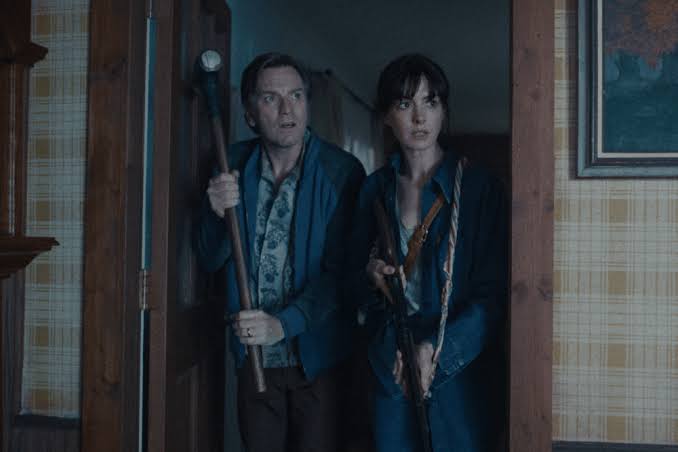
The End Of Oak Street (15)
There’s nothing like a world in peril to pull a fragmenting marriage back together, which is the engine driving this disaster -cum- survival movie that basically rips off Jurassic World:Dominion and is spuriously anchored in Carl Sagan’s concept of wormholes. It’s one such, announced by thunder and dazzling lights, that creates a shift in the fabric of time that transports the suburban Oak Street neighbourhood to a prehistoric zone populated by ravaging dinosaurs.
Into this are thrust the Platt family, dad Greg (Ewan McGregor) who’s working a pizza delivery job having been, as explained later, made redundant, wife Denise (Anne Hathaway), who’s secretly writing a novel grounded in her marital unhappiness, cosmology-obsessed teenage daughter Audrey (Maisie Stella) and her younger brother Brian (Christian Convery) who carries a bow and arrow and lives in fear of the local bully. Plus their loveable scene stealing dog Starbucks who’s forever annoying tetchy neighbour Mel (P.J. Byrne) by crapping in his garden. Alarm bells should be rung when he finds turd pile that’s actually bigger than the dog, but it takes a while before it gradually dawns on them that they’re not in Kansas anymore, so to speak. At which point it become a series of sequences with them all variously battling and running from assorted velociraptors, sea-creatures, a slithering reptile and, of course, a Tex, as their fellow residents become dino-snacks, hooking up with orphaned survivor Jeanette (Jordan Alexa Davis), who may or may not hint at a frisson of mutual attraction with Audrey, along the way as they seek out a wormhole to take them back to their own time. The family naturally reconnecting in the process.
Taking its cue from 80s disaster movies (but not, insists producer JJ Abrams, another Cloverfield entry despite clues and coincidences suggesting otherwise), it starts out well and the core cast perfectly do what’s required of the genre, but the longer it goes on the more repetitive it becomes as it mixes humour with the horror to keep.you engaged. Realising that what the Jurassic franchise lacked was shots of dinosaurs copulating and crapping, writer-director David Robert Mitchell obligingly throws them together in one scene with Greg posing for a photo in front of them. Despite its obvious plot borrowing, for the most part it’s quite entertaining, but the flaws gradually undermine the foundations with a pointless scene with Audrey sitting in the car in the garage listening to Valerie, characters filmed from quirky close-up side-on angles before a lazily messy but tidy ending that, having driven down a plot cul de sac, resets events, brings everyone back from the dead and then simply fizzles out. (Cineworld 5 Ways, NEC, Solihull; Everyman; Mockingbird; Odeon Birmingham, Broadway Plaza Luxe, West Brom; Omniplex Great Park; Reel; Royal; Vue)
ALSO RELEASED
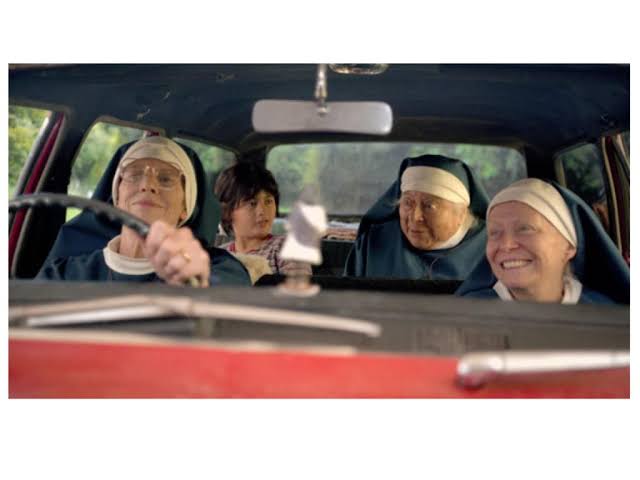
Holy Days (12A)
Written and directed by Nat(halie) Boltt and adapted from a novel by New Zealand author Dame Joy Cowley, set in 1974, this is an undemandingly genial Kiwi road movie in which, in order to save their rundown convent from a scheme by duplicitous Bishop Chaylor (John Bach) to sell it to a property developer who intends to demolish it, three elderly nuns, ciggie-sneaking Sister Agnes (Judy Davis), good-natured Sister Mary Clare (Jacki Weaver) and Sister Luke (Miriam Margolyes), a dedicated gardener in the early stages of dementia, set off to recover the original deeds held by erstwhile convent member Patricia (Tanea Heke) showing they hold the rights to the Maori land on which it stands.
Joining them is young Brian (Elijah Tamati), whose Maori mother (Renaye Tamati), has passed and who is struggling to accept his father (Craig Hall) has got a new (younger) partner, Liz (Boltt), and who wants to visit his late mum’s sacred mountain, a replica of which he carries in a snow globe. He also happens to be Patricia’s nephew. Then they all have to get back home so they can be in residence and prevent the demolition.
A sentimental yarn about friendship and healing, it crawls along at much the same speed Agnes drives the car she’s stolen from the backstabbing boozy Father Findlay (Jonny Brugh) and lazily relies for its comedy on the notion of eccentric nuns doing silly and unlikely things, as well as losing dentures and farting in bed. The forced humour never much rises above the level of Brian’s malapropism saying Agnes should be prostituted for stealing the car, Luke waddling into the sea with her arse hanging out and frankly poor taste gags about her dementia memory lapses. There’s a ‘touching’ reunion between Brian and the spirit of his mother that sets up a reconciliation with dad and Liz but generally this is a drab, thinly written vanilla affair with the three stars decidedly on low wattage form with some embarrassing mugging and Tamati never called on to do more than look winsome and cute. There’s even not one but two gratuitous dance sequences as well as some utterly pointless stop motion animation. Nuns on the run it isn’t. (Cineworld NEC; Omniplex Great Park)
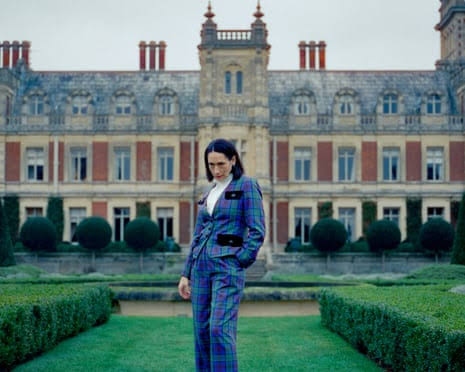
Lady (15)
The feature debut by co-writer and director Samuel Abrahams, this rather odd satirical mockumentary casts Laurie Kynaston as erstwhile BAFTA nominee Sam who thinks his ship’s finally come in when he’s hired to film a Netflix documentary with the camera following the imperious, entitled and self-centred (not self-obsessed, she insists) Lady Isabella Ravenhyde (Fleabag’s Sian Clifford on terrific spirited comedic form), who describes herself as “aristocracy’s answer to the Kardashians”, at her sprawling stately home country estate where she annually hosts and judges the annual talent show Stately Stars for local disadvantaged children.
Disconcerted by his subject’s odd behaviour and narcissism, Sam’s dreams come crashing down when he learns Netflix didn’t commission the film and, indeed, have never heard of Lady Isabella. However, her deception revealed, she offers to pay for the documentary herself as a vanity project on her journey of artistic discovery, announcing she intends to enter – and win – Stately Stars herself as a validation of her unrecognised talents, these involving a complex multimedia performance-installation piece which includes poetry (reciting from Macbeth), action painting and photographs of her apparently dead body lying around the grounds.
Things take a more promising turn, however, when the film enters David Lynch territory as Isabella’s hands – and eventually her other limbs – turn invisible (surely a filmic The Lady Vanishes in-joke), symbolically serving as a somewhat obvious metaphor of how, in her perimenopause, she feels herself to be increasingly invisible as both an artist and a woman.
It could have done with losing at least 15 minutes, but it nevertheless keeps you engaged to see where it all leads (the show itself, Isabella initially wearing a bird costume and gradually revealing – or otherwise – her invisible body, is a bizarre treat) as it variously takes in commentary on class divisions (looking to appear equalitarian, Isabella instructs her housekeeper, Juliet Cowan, to not call her milady) and a bizarre predatory attempted seduction by drinking milk in front of Sam, who turns out to be lactose intolerant, as well as a portrait of him that includes a strategically positioned phallic bottle portrait of Sam. He anxious and insecure, a sort of bond gradually develops that strikes an emotional chord about loneliness, vulnerability and the need for connections, giving this a heart you might not expect. (Mockingbird; Vue)
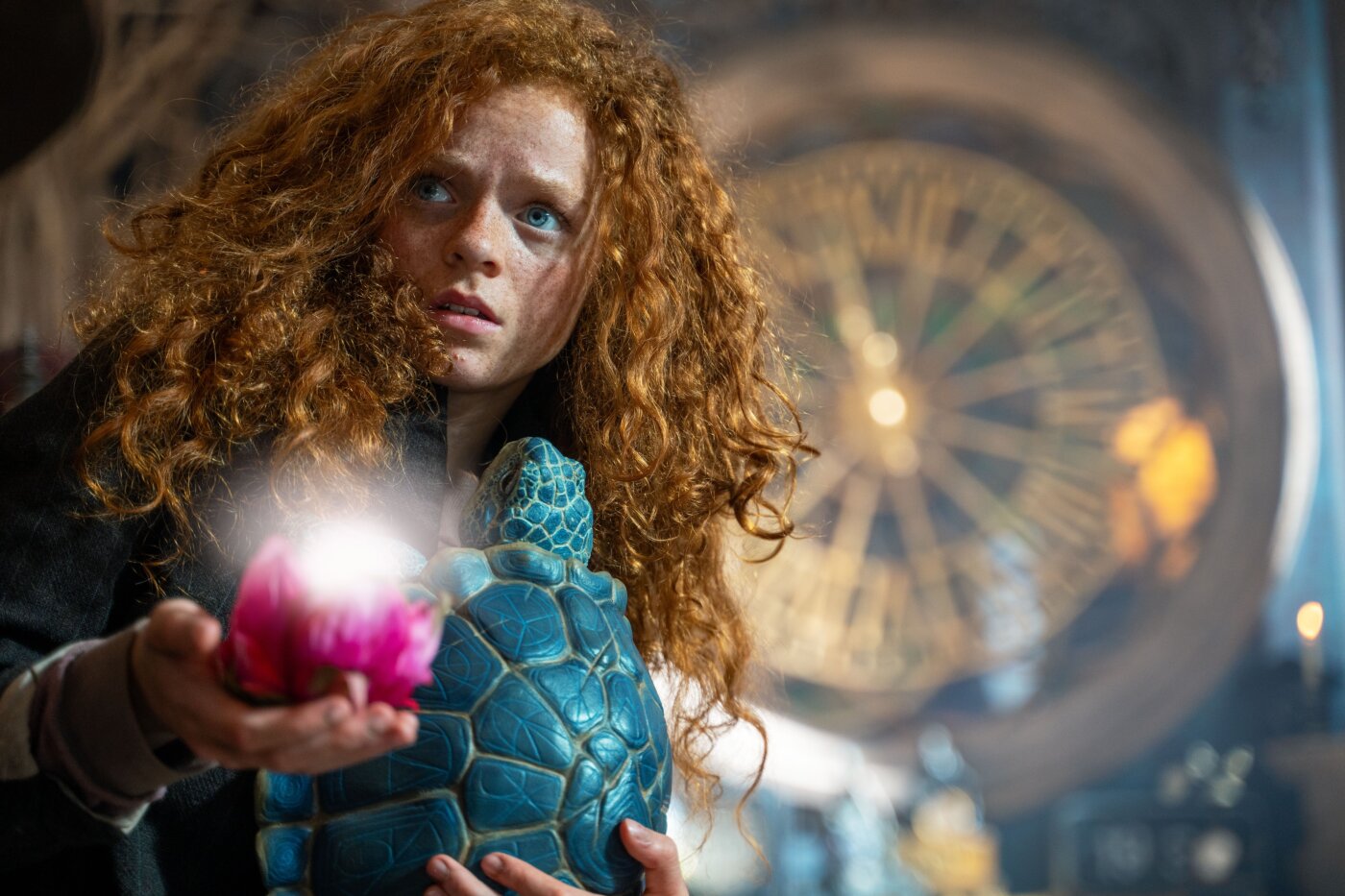
Momo and the Time Thieves (PG)
Updated from German author Michael Ende’s children’s book, director Christian Ditter looks to evoke the magic of fantasy films such as The Golden Compass and The House With A Clock In Its Walls, but, with weak acting, poor dialogue and mediocre direction it fails on pretty much every level.
Set in an unnamed European city,aspirant storyteller Gino (Araloyin Oshunremi), who supports his family delivering pizzas among other jobs, discovers the orphaned Momo (Alexa Goodall, all red curls and blue eyes) living in an old amphitheatre (where Kim Bodnia’s street sweeper brings her food) and, with the gift of listening, she become celebrated in helping people open up to her and solve their problems. Then, one day, a woman (Laura Haddock) dressed in grey buttonholes Gino’s mother Liliana (Jennifer Amaka Pettersson) and gives her a glowing bracelet which she says will literally help her save time from doing irrelevant tasks so she can bank it up and spend it with her children. An adverting campaign by the Grey corporation, headed up by Richter (Claes Bang) sees more and more people following her example and turning their backs on Momo with Gino becoming an influencer guru. However, when she discovers The Greys are actually stealing people’s lifetimes for their own purposes, assisted by a mystical turtle, she sets out to try and stop them, leading her to the guardian of time, Master Hora (Martin Freeman, who also narrates).
While looking to present itself as a critique of social media, self-optimisation and corporate capitalist greed that steals the lives of the workforce, stilted dialogue, the woodenness of the two child actors, some iffy GCI and the clunkiness of the whole narrative mean it just falls uninvolvingly flat. Don’t waste your time. (Cineworld 5 Ways, NEC; Odeon Broadway Plaza; Omniplex Great Park; Vue)
Sunny Dancer (15)
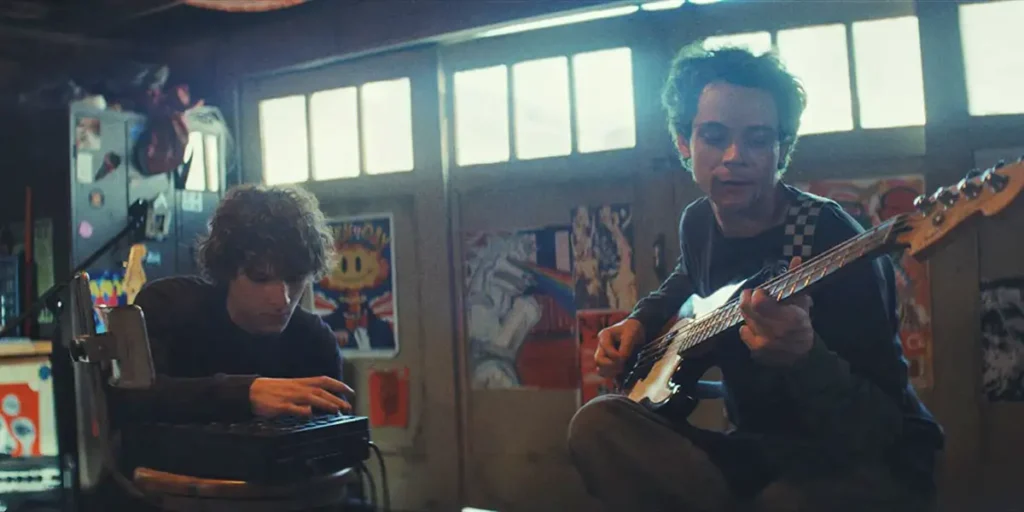
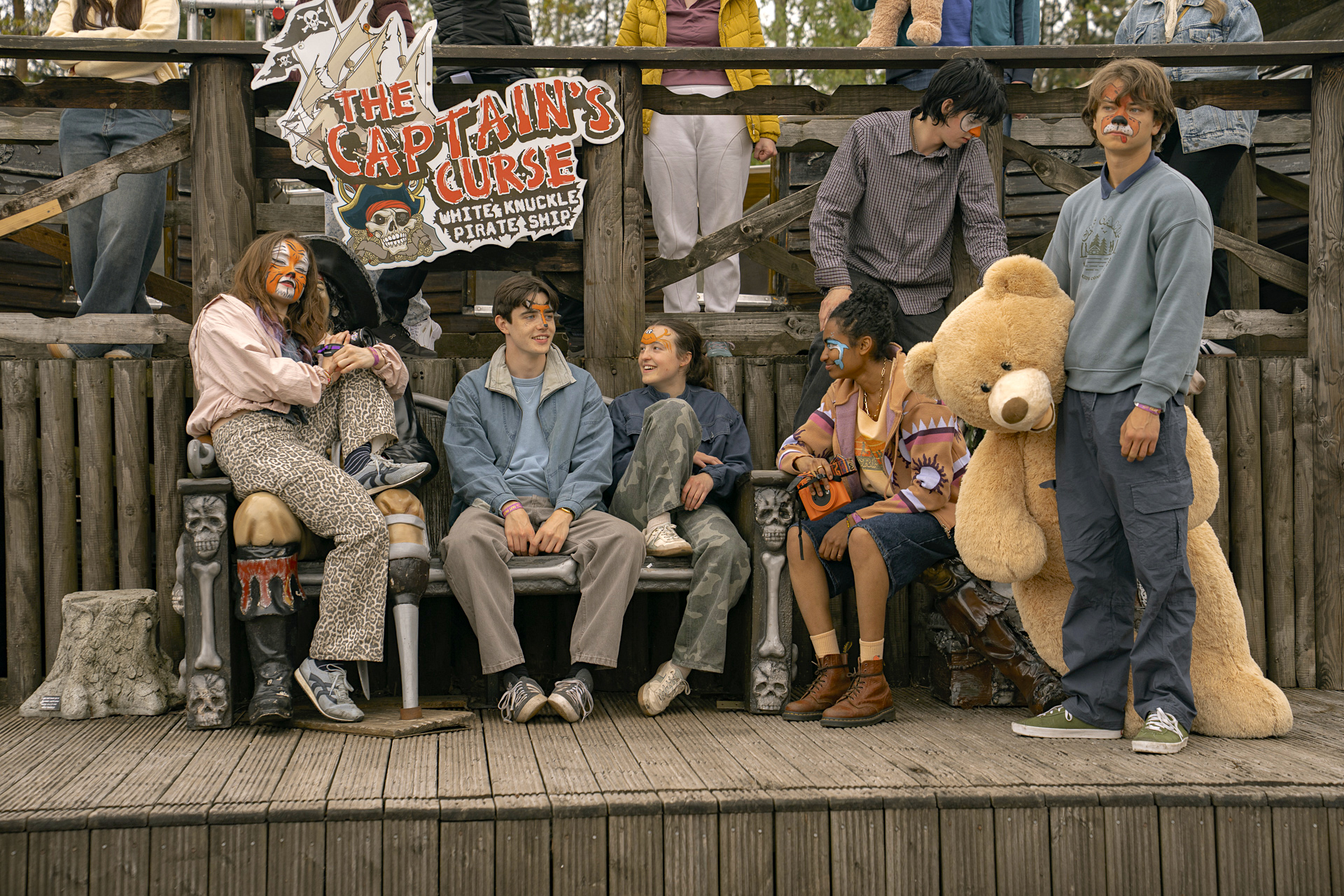
Ten months into remission for leukaemia, 17-year-old Ivy (The Last of Us’s Bella Ramsey) is pressured by her parents (James Norton, Jessica Gunning), concerned that she’s become socially withdrawn, into attending CRF (Children Run Free), a Scottish summer camp (she calls it Chemo Camp) designed to ease young cancer survivors back into childhood, and run (for personal reasons explained later) by theatrically upbeat counsellor Patrick (Neil Patrick Harris) and his team.
Initially resentful, angry, rebellious and brattish in true form to such coming-of-agers, she slow thaws as she becomes friends with a peer group that includes roommate Ella (Ruby Stokes), who’s horny for camp counsellor Tristan (Louis Gaunt), emo kid rebel Ralph (Earl Cave, son of Nick), tarot card reader Maisie (Jasmine Elcock), shy Archie (Conrad Khan), who has a crush on Ella, and Jake (Daniel Quinn-Toye), with whom she strikes up a romantic and physical relationship.
Ivy’s later revealed survivor guilt issues are well-handled and the core cast have good chemistry, their relationships and interactions are believable and, when needed, moving, and while inevitable deaths take place off camera (those who pass remembered on Patrick’s photo wall), it’s never melancholic or mawkishly sentimental, favouring instead genuine emotions and some snappy humour, with Gunning getting the best line as she warns the other teens that if they mess with her daughter “cancer will be the least of your worries”.
It stumbles with a third act lapse into imagined interaction denial and is perhaps clumsily direct in its message in having Ivy say “Here, I’m just Ivy, not Ivy with cancer”, while it seems hugely unlikely that any group of 17-year-olds are going to whoop it up when James Blunt turns up at the mandatory talent show to sing You’re Beautiful. But while predictable, the authenticity of the performances and, for all the anxiety, hurt and grief, the determinedly upbeat tone which favours joy over sadness ensures this lives up to its title. (Cineworld NEC, Solihull; Mockingbird; Odeon Birmingham, Broadway Plaza Luxe; Omniplex Great Park; Reel; Vue)
NOW SHOWING
Anaconda (12)
Diving into self-referential meta waters, sharing a similar concept as Be Kind Rewind, director and co-writer Tommy Gormican, who made Nicolas Cage self-spoofing meta comedy The Incredible Weight of Massive Talent, asks when is a reboot not a reboot. The answer here being a film about making a reboot, Released in 1997, a Jaws knockoff giant snake horror with unintentionally hilarious dialogue, Jon Voight’s bizarre accent and an unconvincing animatronic snake, it’s since become a cult classic, and, for the sake of the plot driver here, was a college days favourite of buddies Griff and Doug, the former appearing alongside friends Claire and Kenny in the latter’s teenage amateur horror Quatch.
Years on, having moved to LA to become a movie star, Griff (Paul Rudd) once appeared in four episodes of SWAT and is now reduced to one liners in shitty daytime soaps. And he can’t even get through that. Doug, meanwhile, remained in Buffalo, got married (to Iona Sky), had a kid while his movie dreams shrank to making overly-plotted wedding videos. Everyone reuniting for his birthday, for which Griff has unearthed a VHS of Quatch, his friend suggests they get back together and reboot Anaconda, for which he claims to have secured the rights. Initially reluctant, having a follow your dreams while you still can epiphany, Doug eventually agrees, he directing, Griff starring alongside recently divorced ex-girlfriend lawyer Claire (Thandiwe Newton) who stumps up the finance and for whom he still carries a spark, and the ever unreliable Kenny (Steve Zahn), who insists he’s got his pills and drink issues under control, as cinematographer.
And so it’s off to the Amazon with the most basic of film equipment where they hook up Santiago (Selton Mello), the eccentric snake handler Kenny’s hired. Needing a boat, they wind up with one commandeered by supposed captain Ana (Daniela Melchior), first seen being pursued by men with gun in the opening sequence as part of the subplot about illegal goldmining. Naturally, everything goes wrong, starting with Griff accidentally killing Kenny’s snake, meaning they have to procure another, though going into the jungle at night to find doesn’t seem the best considered option. At one point, just to underline the premise for those not paying attention, Doug remarks “We came here to make Anaconda. And now we’re in Anaconda!”
While its gags about Hollywood aren’t anywhere near as sharp as The Studio, at one point in the final stretch, someone remarks about filmmakers making it up as they go along, and that certainly seems to be the case here (most notably in a scene where Kenny, who has public urination issues, having to piss on Doug’s leg when he’s bitter by a tarantula). And then there’s how the group encounters a film crew making their own Anaconda reboot (a couple of the original stars get to cameo), only to fall prey to the monster reptile (CGI but no more convincing than the original) lurking in the waters, while the subplot then throws up its own twists.
It’s funniest in the opening stretch, the laughs becoming more forced when it veers off into actually horror territory and tries to juggle ‘themes’, as Griff and Doug keep going about, of friendship, dreams and whatever, and descends into such ill-conceived slapstick as Black running from the snake with a wild hog strapped to his back.
The four leads work well together, sparking off one another, with Black for the most part less manic than usual and Rudd playing small tics to good effect, Zahn doing what Zahn does and Newton making the most of an underdeveloped role and demonstrating how to give good headbutt. Never especially hilarious or scary, even so it’s nowhere near as awful as it might have been. Which is a recommendation of sorts. (Sky/NOW)
Animal Farm (PG)
Written in 1945 as a scathing allegorical satire of the 1917 Russian Revolution and the subsequent rise of Stalinism, and its leading figures, in which farm animals overthrow their neglectful human farmer in pursuit of equality, only to have their revolution corrupted by power-hungry pigs, George Orwell never intended it as a story for children. However, that’s not stopped director Andy Serkis from turning it into an Americanised family-oriented animation complete with fart (the sound of freedom,apparently) jokes.
In this telling, repossessed by the bank after, Farmer Jones fails to make his mortgage payments, Manor Farm is set to be sold to Pilkington Industries, led by ruthless billionaire Frieda Pilkington (Glenn Close in panto villain mode), who intends to slaughter the animals. However, a sow named Snowball (Laverne Cox in a gender reversal casting from the book) realises they’re going to a slaughterhouse not a laughterhouse, and the animals duly rebel, driving out the humans and taking control of what they rename Animal Farm, establishing a set of rules designed to prevent them from becoming like humans.
However, Snowball’s rival, Napoleon (Seth Rogen), who sneers at her plan to generate electricity with a watermill, takes advantage of the animals struggling to cope by making a power grab, forces Snowball into exile and strikes a deal with banker Mr Whymper (Steve Buscemi), an associate of Pilkington, agreeing to pay $1000 a month to prevent repossession. To which end, Snowball’s former protege and now Napoleon’s surrogate son, Lucky (Gaten Matarazzo),a whole new character, proposes operating a market which, proving a success, sees the pigs moving into the farmhouse, becoming business pigs, and, with the help of his toadying lackey Squealer (Kieran Culkin), Napoleon rewriting the rules to his advantage (all animals are equal but some are more equal than others), now walking on two feet, wearing clothes, drinking alcohol (or naughty juice as it’s called here) and buddying up with humans. Lucky starts to reconsider the situation, especially after aged workhorse Boxer (Woody Harrelson) is sent to the glue factory and Napoleon plans to sell off all the other animals, and conspires with elderly donkey Benjamin (Kathleen Turner) to lead a revolt.
Orwell’s central message that power corrupts is still at the heart of the story, but everything else is so bent out of shape that it’s a travesty, including the excision of the boar Old Major. There’s some star wattage voices, including Jim Parsons as the voice of Carl and his flock, while Serkis himself voices Farmer Jones and Randolph the rooster, but they’re at the mercy of some shoddy animation, clumsy dialogue, overcooked pop funk music (though Shirley Bassey singing Propellorheads’ History Repeating is an inspired end credits add on) and the addition of a happy ending and, something I’m sure Orwell would have regretted overlooking, the introduction of twin sisters show pigs (Iman Vellani), one of whom is Lucky’s romantic interest. Defanged and dull, it’s a real pig’s ear. (Vue)
Apex (15)
She may have had several stunt doubles, but Charlize Theron still gives a powerful physical performance in this survival prey vs predatory drama set in the Australian outback. Playing adrenaline junkie Saha, in the taut opening sequence she and husband Tommy (Eric Bana) are climbing Norway’s forbidding Troll Wall peak when a storm comes in and, she forced to cut the rope tying them together, an avalanche sends him to his death.
Cut to some months later as, holding Tommy’s lucky compass, she turns up at the fictitious Wandarra National Park on a pilgrimage of healing, and is warned by the ranger at the gas station that there’s been a string of disappearances, including families with young kids, in the region to where she’s headed. She’s then harassed by a pair of lascivious game hunters (Matt Whelan, Rob Carlton), ominously named Diesel and Ripper, before a third stranger, Ben (Taron Egerton with credible Aussie accent), intervenes, she asking him how to reach the Grand Isle Narrows. Given to possible routes she, naturally, chooses the hard but scenic way, starting out at Blackwater bay.
Arriving at night, she has another intimidating encounter with the hunters who are skinning kangaroo carcasses (a misdirection given they then vanish from the plot) and, in the morning sets out down the rapids by kayak, setting up camp only to awake in the morning to find her bag missing and, continuing down the river, eventually reaching the Narrows where she’s surprised to find Ben already there, explaining he lives in the area, where he makes the homemade jerky he supplies to local stores, and offering to share supplies – which, naturally, turn out to be the ones that were stolen. He then produces a crossbow and says she has until the song on the stereo ends to get a head start before he comes after her.
The feature debut by writer Jeremy Robbins and directed by Iceland Baltasar Kormákur, it’s firmly rooted in the same wilderness terror territory as things like Wolf Creek while also echoing Kormákur’s earlier thriller Beats, but with a two rather than four-legged predator. Once the chase begins, the film follows a fairly predictable course, embellished by a captured Sasha, chained to Ben, being taken to his man cave, discovering he’s a cannibalistic serial killer with ghoulish orthodontics and mummy issues that make Norman Bates seem well-adjusted and learning the grisly ingredients of his distinctive tasting jerky, building to a climax that moves from yet more fighting in the rapids to, she having broken his leg, a mirror of the tandem climb opening.
A virtual two-hander, while boasting some spectacular cinematography and wild water sequences, it’s basically standard B-movie fare with just a token subtext about grief, guilt and letting go, but Theron and Egerton deliver fully committed performances, even if he can be a tad over-manic, while Kormákur slowly builds the sense of dread before all hell breaks loose in the visceral climax. (Netflix)
The Bad Guys 2 (PG)
A sequel to the 2022 Dreamworks animation, for late arrivals this opens with a brief catch-up detailing how, in a car heist and a fast paced Cairo car chase, critter criminals (motto – the heist is never about the loot), fast talking dapper Mr. Wolf (a superb Sam Rockwell), slippery safecracker Mr. Snake (Marc Maron), toxically flatulent Mr. Piranha (Anthony Ramos), unlikely prone to panic master of disguise Mr Shark (Craig Robinson), and snarky hacker Ms. Tarantula (Awkwafina), were eventually caught and turned over a new leaf. Cut to the present and they’re down on their luck and a crappy car, unable to get jobs on account of their records Wolf goes for an interview at a bank he robbed three times), only a newly ripped Snake, who’s reinvented himself as a yoga-and-kombucha health fanatic, seeming upbeat.
Things proceed to get worse when they’re framed for a series of robberies carried out by the Phantom Bandit, alias snow leopard Kitty Kat (Danielle Brooks), who heads up a bad girls trio alongside raven Doom (Natasha Lyonne), the unwitting Snake’s girlfriend (kiddies’ eyes should be averted from their a make-out session), and literal-minded wild boar Pigtail Petrova (Maria Bakalova). They’re stealing a metal known (in a Hitchcock in-joke) as MacGuffinite, aiming to use its properties as a gold magnet to steal all the gold on Earth. It’s a plot that entails using a video of Wolf’s love interest, red fox state Governor, Diane Foxington (Zazie Beetz), that reveals her secret past as the Crimson Paw thief, to blackmail Wolf and his buddies into taking part in one last job, stealing one final MacGuffinite before hijacking the Moon X rocket from Musk-like tech billionaire (Colin Jost) and launching into space.
It’s a fairly twisty and convoluted plot, but it never loses momentum or sags, climaxing in a stunts-filled space sequence that adds a touch of Mission: Impossible and Moonraker to its Ocean’s Eleven meets Reservoir Dogs template. The voice cast and character chemistry is terrific, the core ensemble being augmented by the return of Alex Borstein as Misty Luggins, former Police Chief and now Commissioner, and Richard Ayoade as guinea pig villain Professor Marmalade, who, now in prison and bulked up, prompts a sly Hannibal Lecter homage when he’s visited by Diane. Visually dynamic, crammed with great gags, glowing with charm and sporting a very smart screenplay, it ends setting up a further sequel with our anti-heroes reconfigured as a team of anthropomorphic secret agents. Bring it on. (Sky/NOW)
Bugonia (15)
The fourth teaming of director Yorgos Lanthimos and star Emma Stone, the title referring to an ancient Greek belief that bees spontaneously generate from the carcasses of dead oxen, adapted by The Menu screenwriter Will Tracy, this is a remake of 2003 South Korean film Save the Green Planet! but with a gender switch for two of the characters. As such, anyone who’s seen the original will be aware of the last act twist – which here ventures into the realms of 60s TV sci fi cheesiness but, with its final scenes scored to Where Have All The Flowers Gone, still packs a chillingly numbing punch, a conspiracy thriller rooted in the premise that just because you’re paranoid doesn’t mean they’re not after you, exercises a gripping cocktail of tense drama and black comedy.
Stone plays Michelle Fuller, the high profile power-dressing, subtly manipulative, coldly calculating CEO of pharmaceutical company Auxolith who’s abducted by bee-keeping conspiracy theorist eco-terrorist Teddy Gatz (Jesse Plemons), who works at the company’s warehouse, and his neurodivergent cousin Don (Aidan Delbis, himself autistic), who believes her to an Andromedan, part of an alien species that’s infiltrated the human race and is killing off the bees in keeping with Colony Collapse Disorder. Holding her captive in their basement, smearing her with antihistamine cream and shaving off her hair so she can’t communicate with the mothership, Teddy’s plan is to use her as a bargaining tool to force the aliens to leave Earth, giving her four days to admit the truth before the lunar eclipse allows her ship to enter the atmosphere undetected.
However, while clearly deranged and delusional, Teddy’s actions are also driven by a different motive in that his mother, Sandy (Alicia Silverstone), was a guinea pig for one of Auxolith’s drugs, leaving her comatose in a nearby hospital with Michelle covering things up. Initially vehemently refuting his alien claims but then deciding to play along, Michelle tries to turn things to her advantage, noting that the almost childlike Don, who, like Teddy’s has been injected with a “chemical castration” formula, seems uncomfortable with his cousin’s plans. During the torture (aptly set to Green Day’s Basket Case), Teddy, in full-on psychosis, becomes persuaded that she’s a member of the Andromedan royal family, and, out of respect, lays on assort of state dinner upstairs, only for taunting to see it end in a fight and a fork stabbing. Meanwhile, the police have launched a hunt and, adding another creepy layer, local sheriff Casey (Stavros Halkias) keeps coming round looking to make amends for having molested Teddy when he was his babysitter.
Things turn bloody with a suicide and a subsequent murder, before Michelle persuades Teddy his mother can be cured with anti-freeze, something that inevitably does not end well, she, playing to his fantasies and explaining that, after accidentally wiping out the dinosaurs, the experiment was designed by the Andromedans to help humans, which they created, evolve beyond their self-destructive nature.
Again rooted in themes of power struggle dynamics, class, entitlement and media manipulation, while more narratively straightforward than Lanthimos’s past two outings, it still runs the freak flag up the deadpan humour mast, gleefully allowing the cast to dive into its eccentricity and weirdness. Stone once more gives 110 percent to the character and narrative while Plemons, all lank hair and barely suppressed rage, is terrific, both engaging empathy and revulsion as you’re led to ask which truth is actually out there. (Sky/NOW)
The Choral (12A)
A fourth teaming of director Nicholas Hytner and writer Alan Bennett, this is a slight but gently comic and touching tale of the power of music to heal, comfort and inspire. The setting is the fictional Yorkshire village of Ramsden in 1916 where the war has seen many a young volunteer (conscription not yet introduced) go off never to return, 17-year-old postboy Lofty (Oliver Briscombe) delivering the dreaded messages to newly bereaved wives and mothers. It’s also taken its toll on the village choral society which, funded by mill owner Alderman Duxbury (Roger Allam), who’s recently lost his own son with his wife in permanent mourning, has seen its choir master having decided to enlist, thus requiring a replacement. To which end, committee member Joe Fytton (Mark Addy), the local photographer who snaps the lads before they ship out, suggests they approach organist turned conductor Dr. Henry Guthrie (Ralph Fiennes).
Aside from being an atheist and having no patriotic sensibilities (his reaction to a rendition of God Save The King is an eye rolling joy), the real problem, certainly as far as Duxbury’s concerned, is that he’s spent his recent years in Germany of his own volition. Nevertheless, reputation outweighs prejudice and he duly agrees to take up the position (though the local kids taunt him and the older members sneer), bringing with him his own conscientious-objector pianist, Horner (Robert Emmas), and despite the fact he annoyingly keeps referencing German philosophers and composers, things seem to settle down as he auditions for new singers, among them Bella (Emily Fairn), whose soldier boyfriend Clyde (Jacob Dudman) is MIA, Lofty and his chums Ellis (Taylor Uttley) and Mitch (Shaun Thomas), and, a real find, Mary (Amara Okereke) who loves singing while she collects for the Salvation Army. Guthrie’s somewhat less impressed by Duxbury, who sees himself as the choir’s star turn.
There’s also an unspoken reservation about Guthrie being a closeted homosexual, a somewhat unnecessary plot addition involving Horner’s crush and an ill-fated romance with a German naval officer that has him forever checking the papers for news of sea battles.
After making an approach to Edward Elgar to get permission, they eventually settle on performing his good vs evil parable The Dream of Gerontius which, as it develops, becomes a theatrical piece about the war and its casualties, enlisting wounded soldiers into the choir, among them Clyde who’s returned alive, minus an arm, much to the consternation of Bella who’s taken up with Ellis, and is chosen by Guthrie to replace Duxbury as the voice of good, he getting to sing the Satan part as compensation. As fate has it, Elgar (Simon Russell-Beale) is in the area for an investiture ceremony, and, while Guthrie demurs, Mary secretly invites him to come and check out their interpretation. His reaction, not quite what she’d hoped.
With a cast that also includes Alun Armstrong as the village’s funeral director and Lyndsey Marshal as the local prostitute with quite a client list, its ensemble nature sometimes struggles to incorporate all the different stories (the three boys turn 18 and get their call-up papers, Lofty looking to lose his virginity before he goes), but otherwise, anchored around a typically centred performance from Fiennes, it deftly balances the poignancy and the humour (Bennett’s often sharp wit in solid form) as the community bonds over common goals and tragedies. A touch rose-tinted with the cosiness of a light and warming Sunday evening BBC drama, it’s an undemanding joy, but a joy nonetheless. (Sky/NOW)
Crime 101 (15)
Adapted by writer-director Bart Laton from the Don Winslow novella, the 101 refers to the LA highway and the crime concerns a string of high end jewellery robberies along the route, the thief being Mike (Chris Hemsworth on terrific form) who leaves no traces and never harms anyone. On his trail but with no clues to follow is Lou Lubesnick (an understated Mark Ruffalo), a hangdog detective recently dumped by his long-term girlfriend (a cameoing Jennifer Jason Leigh) whose theory that it’s all the work of one man is dismissed by his fellow cops and superior who just want cases wrapped up. Mike literally works for Money (a grizzled Nick Nolte), who sets up the heists and takes his cut but, after a close call involving a jammed gun, Mike’s decided to call time, a decision compounded by having struck up a romance with Maya (Monica Barbaro), a music publicist who rear-ended his car and who is frustrated that she knows nothing about his background. Passing on a job he was doing for Money in Santa Barbara, considering it too risky, it’s carried out instead by motorbike-riding thug Ormon (Barry Keoghan who starred in Layton’s heist docu-drama American Animals), who, unlike Mike, has no compunctions about violence.
The net, however, is closing in with Lubesnick using DNA from a blood sample found in Mike’s abandoned car to uncover his real name and identity. Meanwhile there’s a plot intertwine involving Sharon Colvin (Halle Berry, feisty), an insurance broken for elite clients who’s pissed at being constantly passed over for partner and whom Mike tries to get onboard for a robbery involving a ton of cash, illegally important diamonds and his upcoming wedding at the Beverly Wilshire Hotel, the confidential details of which she has access to.
Inevitably summoning Michael Mann references, though this is more a study of characters adrift in a sea of corruption (Mike has issues about his line of work, Sharon about being a woman in a toxic man’s world and overshadowed by a younger rival, Lou with the department’s cover up of a shooting) than action movie, Layton still has a firm grip on the slowly building tension (even if there’s a couple of loose ends involving Money and Mike’s hacker) while the hotel room showdown by way of two characters engaged in deceiving each other while riffing on Steve McQueen and the chaotic car chases through LA (with its subtext scenes of homelessness and urban decay) get the pulse working overtime. After the Damon/Affleck Netflix thriller The Rip, this is shaping up to be a great year for 90s throwback crime thrillers. (Amazon Prime)
Dead Man’s Wire (15)
In 1977, behind with his mortgage payments for an Indianapolis property that planned to develop into an affordable shopping centre, refused time to make payments, and suspecting his broker, Richard O. Hall, and his father where conspiring to defraud him, with the bank foreclosing and they buying the land for below its market value (though there was no evidence to substantiate this), Tony Kiritsis, a paranoid geek with a dodgy tache, turned up at Hall’s Meridian office with a shotgun fitted out with a dead man’s wire to the trigger. This was affixed to Hall’s neck so that if he tried to escape or the police shot at Kiritsis, the gun would blow Hall’s head off, Kiritsis demanding a settlement and a public apology from Hall Senior as events played out over three days.
Very much in the same veinas Dog Day Afternoon (indeed Al Pacino plays Hall’s loathsome father who mocks his son for having Stockholm syndrome), Network and The Sugarland Express, following a documentary and a podcast, his story is now given a feature film treatment by Gus Van Sant and writer Austin Kolodney with Bill Skarsgård as Kiritsis, Dacre Montgomery as Hall Junior and Colman Domingo as Fred Temple (based on WIBC-AM news director Fred Heckman), the local soul DJ (cue tracks by Roberta Flack, Barry White, Donna Summer and even Deodato’s Also Sprach Zarathustra) who Tony, and not the brightest spark he thinks he is, says is the only person he trusts and who serves as the film’s community representative and narrator.
The setting moving from Hall’s office to Tony’s shabby apartment, around which cops (many of whom were Tony’s acquaintances) and reporters (among them Myha’La as fictionalised twenty-something, Black local TV reporter Linda Page looking for a scoop), cluster, he enjoying his sudden fame but without any real idea of where his stunt is going. Indeed, things rather tail off following Hall’s release as the film tidies up what happened next, though there’s a sense of satisfaction at Meridian’s fate.
With a supporting cast that includes Neil Mulac as FBI hardhead Patrick Mullaney and Cary Elwes as the Indianapolis detective assigned to kill Tony, the film comes with a clear economic, political and cultural framework and labour and capital commentary that can’t but conjure thoughts of the 2008 subprime crisis while Gil Scott-Heron’s The Revolution Will Not Be Televised pointedly plays over the end credits. (Sky/NOW)
Don’t Let’s Go To The Dogs Tonight (15)
Adapted by first time director Embeth Davidz from part of Alexandra Fuller’s memoir of her childhood growing up in Rhodesia period to and during its transition to Zimbabwe, the title referring to an expression about things falling apart, with its limited release and lack of promotion, seems unlikely to draw more than a handful of punters. Which is a shame because, closer in tone and spirit to Chocolat than Out Of Africa, its easily one of the year’s best.
It’s 1980, on the eve of the election that brought Robert Mugabwe to power and saw the Black majority win back control of their own destiny, and also at the tail end of the terrorism that saw many white farmers and so-called Black collaborators, being murdered (the film doesn’t shrink from footage of atrocities). Herself born in South Africa, Davidtz plays Nicola Fuller, a horse-loving part-time policewoman married to soldier husband Tim (Rob van Vuuren) who tends the family farm (and sleeps with a machine gun) when he’s away on patrols. She has two daughters, awkward and insecure adolescent Vanessa (Anina Reed), who will at one point be sexually abused by her ‘uncle’, and the fiercely outgoing 8-year old tomboy Alexandra (Lexi Venter) or Bobo as she’s affectionately known. There were once two other children, guilt over the death of one of them weighing heavily on Bobo. To help on the farm, there’s two Black servants, the gruff Jacob (Fulami Shilubana) and Sarah (Zikhona Bali), who’s very much the nanny to the somewhat over-indulged Bobo, something she’s warned puts her in danger (compounding the images of armed patrols, hostile looks from local Blacks and scenes, shots through binoculars flashing in the distant hills are an early clue that things will turn nasty).
As the election night unfolds and the consequences are brought home, the alcoholic Nicola increasingly unravels. However, as with the book, the film is told and shot from Bobo’s perspective, soaking up everything she sees and hears and totally without a filter in what she says (such as how Africans don’t have last names), and who also provides the insightful and often amusing voice over and dialogue commentary (she speaks of her parents having sex as moving the furniture with their clothes off), talking of being afraid to go to the toilet at night lest a terrorist, riding her motorbike through the bush, smoking cigarettes and shooting bottles with her popgun. As such, Venter, who had never acted before, is a sensational find, her blonde hair matted, her face almost constantly smudged with dirt, her eyes darting, at once both vulnerable and a feral wild animal. In a just world, she’d be up there in the Best Actress nominees. With a soundtrack that includes South African artists Roger Whittaker and Clut and, inexplicably Chris de Burgh’s Patricia The Stripper, the film powerfully builds to a close and the end of the exile from Eden myth Sarah was telling Bobo. Do yourself a favour and go to the dogs. (Sky/NOW)
Enola Holmes 3 (12)
Helmed this time round by Adolescence director Philip Barantini, reunited with series scripter Jack Thorne, shorter than the two previous films, Millie Bobby Brown returns as Sherlock’s younger sister, picking up from Enola Holmes 2 as, now in her twenties, she agrees to marry her House of Lords lover Tewkesbury (Louis Partridge), despite her brother (Henry Cavill) cautioning what a change of name might mean to her independence and identity. The wedding’s set to take place in Malta, where his father, serving as an officer during the British occupation, married his mother, with Sherlock invited to walk her down the aisle, though he’s also there working on a case. However, while Tewksbury’s waiting at the church, Enola, who’s been having doubts regarding how a Lady’s position in society will sit with her detective passions, is rushing to the ceremony in a carriage when she’s stopped by Dr Watson (Himesh Patel, getting more to do this time round) who tells her Sherlock’s gone missing, likely kidnapped (Cavill spends much of the film tied up in a cave).
Throwing marital plans on the back burner, she sets out to try and find him, initially following the British Army sergeant she saw him checking out earlier, who is shot before she can question him, his last words being ‘wrath’, a clue to add to the word Khost, a city in Afghanistan, Sherlock had scrawled on the mirror during his abduction. Matters are further complicated when her future mother-in-law (Hattie Morahan) is also kidnapped and a woman Enola’s following, believing she’s Adeline Rathe, as opposed to wrath, is also shot and killed.
It comes as little surprise, especially given the film’s prologue, that criminal mastermind Moriarty (Sharon Duncan-Brewster) is behind all this and, without revealing too much, the narrative unravels a colonialism-critiquing tale of dodgy dealings in the name of the British Empire, prejudice, a missing treasure of looted gold, and some hidden secrets regarding the Tewskesbury family.
Again having Enola break the fourth wall and speak directly to the audience (though to a lesser extent), it also features Jason Watkins as Brigadier Sampson, Tewkesbury’s godfather and fellow officer friend of his late father, Joe Azzopardi as Mikiel Mizzi, part of the Malta liberation movement Partito Anti-Riformista, a last minute cameo return by Susan Wokoma as Enola’s mentor Edith, and, delightfully, the hugely entertaining return of Helena Bonham Carter as her on-the-run activist mother Eudoria.
The plot with all its misdirections, twist and turns and time outs for a couple of heart to hearts can get a bit knotted at times, echoing Eudoria’s observations that “A puzzle is always as mischievous as the setter” and “the answers we receive are rarely the answers we seek”, but it rarely stumbles in delivering action, wit, fun and another captivating turn from Brown, ending with a coda and a sunken galleon that suggests another game will soon be afoot. (Netflix)
Three years on from Evil Dead Rise, the latest spin-off from the Sam Rami franchise, opens at the same lakeside setting with a never explained scene in which two friends out fishing are killed by a Deadite Stephanie rising from the waters. The figure reappears soon after when, driving off having had a blazing row with his French wife Alice (Souheila Yacoub, basically the film’s Ridley) during an evening with his brother Joesph (Hunter Doohan) and his girlfriend Thya (Luciane Buchanan),abusive restaurateur William (George Pullar) runs her down in the middle of the road, she passing the Deadite connection him as the car bursts into flames.
At the funeral, Will’s parents, Susan (Tandi Wright) and Edgar (Errol Shand) are clearly not happy to see Alice there as tempers and resentments spark. They’re not the only things that flare when, paying his last respects before the coffin goes in the incinerator, Edgar hears a noise from inside and a smouldering arm reaches out to grab him. It’s fair to say that the subsequent lakehouse dinner, dementia-riddled, one-legged granny Polly (Maude Davey, a treat) also present, as Edgar shows an unhealthy interest in grabbing hold of a knife or corkscrew, eventually using the latter to bloodily skewer his dog. Fear not, dog will return and things go completely bonkers when, taking Edgar to hospital, he tries to kill Jospeh and murders Thya with a seat headrest. Making it back to the house, Joseph, Alice, Susan and Polly now find themselves under siege from the Deadite Edgar and Thya, with other family members being eventually possessed too.
This is all about their search for something called the Kandarian Dagger which, in the course of his research into the Necronomicon and demons, Jospeh’s grandfather Benjamin discovered would destroy them (though it seems decapitation works just fine), and which is now apparently somewhere around the house among the possessions Joseph never got round to throwing out.
An extreme take on dysfunctional family relationships and toxic masculinity, directed by Sébastien Vaniček who co-wrote with Florent Bernard, what with head splatterings, chainsawed bodies, gougings and, er, a stair lift, it’s inarguably the most graphic and gruesome of the series, wearing is tastelessness as a badge of honour and yet it’s also possessed of some hilarious dark humour and self-aware silliness; there’s even an inspired romantic and blood soaked kiss between Susan and Edgar that prompts the film’s best line.
Given the nature of the endeavour, characterisation and acting nuance don’t really come into the equation, but all concerned embrace the visceral gore and brutal violence with relish, keeping you open-mouthedly transfixed, when not barfing into the popcorn. A mid-credits scene finds Polly passing on the curse to an unfortunate passing motorists, but stick round to the end for another that takes it back to the crematorium and another Evil Dead Rise connection that, with the line ‘Mummy’s back’, suggests Deadite Ellie (Alyssa Sutherland) will be back for a sequel somewhere down the line. (Odeon Broadway Plaza Luxe; Vue)
Frankenstein (15)
The most dramatic changes come, however, with the character of Elizabeth (the fittingly named Mia Goth, whose confession box moment about the sin of anger is rare comedic touch), who, in the novel is Victor’s childhood sweetheart bride, murdered by the Creature (a quietly graceful and tormented Jacob Elordi) when he refuses to create him a companion. Here though, will he lusts after her (that she also plays his late mother adds a Freudian subtext), she’s actually William’s betrothed and, while she still dies, it’s not at the Creature’s hands, for whom, something of a hottie despite his patchwork body, she has a decided emotional attraction. She also happens to be the daughter of German arms merchant Henrich Harlander (Christoph Waltz), the film’s version of Victor’s chum Henry Clerval, who funds Victor’s experiments (for an agenda revealed later), with William (Felix Kammera) overseeing the elaborate scenes assembling the machinery in an abandoned tower in which Victor channels lightning through the lymphatic system of the figure he’s stitched together from the body parts of assorted hanged criminals and soldiers killed in Crimean War. Pointedly he’s strapped to the machinery like a Christ on the Cross (prompting later thoughts of father, why have you forsaken me). Succeeding in bring him to life, he then chains him in the cellar, looking for some signs[of intelligence, frustrated that all the Creature can say is Victor. Until, following her visit, he adds Elizabeth to his vocabulary.
All this forms the first chapter, with the second, picking up from Victor’s destruction of his lab (during which, in another symbolic variation, he lost a leg), with the Creature recounting his story to the captain and, involving the blind old man (David Bradley), who thinks he’s the Spirit of the Forest, but with a different approach, how he learnt language – and the word friend – from listening to him being read to by his granddaughter from the likes of Paradise Lost and Genesis. Anyway, this is all about humanising someone who pretty much everyone else sees as a monster, though, of course, as somewhat heavily spelled out, the question is who is the real monster, the Creature (who’s horrified to find the notes depicting how he came to be) or, playing God, his Creator. Fathers, sons and forgiveness are the (un)holy trinity at work here.
One of the film’s most powerful elements his how life becomes a curse, the Creature here proving a Victorian Wolverine, both super strong and invulnerable to death (rising up and his flesh healing after being peppered by bullets and stabbed), condemned to an eternity of loneliness. Unlike the novel, the ending brings notes of contrition and redemption, with a final sunset scene that inverts that happy ever after motif. Often visually breathtaking (even if the scenes on the ice look like a stage set and some CGI wolves prove less than persuasive), it offers up a different kind of horror that is philosophically and existentially provocative but ultimately crushingly touching. (Netflix)
The Friend (15)
When her friend, one-night lover, former professor and best-selling author and much married mentor Walter (Bill Murray) with a penchant for sleeping with his younger students, commits suicide, Iris (Naomi Watts), a middle aged singleton creative writing teacher living alone in a small fixed rent New York apartment and struggling with writer’s block, finds she’s expected to take on Apollo, his 180lb Great Dane. Navigating the thorny network of Walter’s widow (Noma Dumezweni) and two former wives, the rich narcissistic Tuesday (Constance Wu) and Elaine (Carla Gugino), as well as Val (Sarah Pidgeon), the adult daughter with whom he recently reconciled and with whom she’s compiling a book of his correspondence, some 30,000 emails, Iris finds herself on her own journey of grief and self-reawakening, she and Apollo each other’s emotional support. There’s also the problem that the apartment block doesn’t allow pets and unless she rehomes it she’ll be evicted.
Adapted from Sigrid Nunez’s 2018 best-seller, it’s framed by scenes of Walter’s fateful encounter with the abandoned Apollo in Brooklyn Bridge Park, a story he regularly rehashed over dinner parties, it’s a touching and very New York story about healing and companionship that has echoes of Neil Simon. Watts is predictably wonderful but even she’s eclipsed by Bing who plays Apollo, initially refusing to eat or get in the apartment lift, lays claim to her bed, destroys the apartment when she’s out and spends the time just staring into space. He only perks up when, as Walter did, being read to. The question being how do you explain death to a dog.
As such, it shares a spirit with things like Hachi: A Dog’s Tale, A Dog’s Purpose, Marley And Me and even Greyfriar’s Bobby, pitching the right degree of sentimentality (you just know she goes from dog hater to dog lover) as well as some gentle if slightly black humour. The final act which has her talking to his ghost about the novel she’s writing based on him, doesn’t really come off, but otherwise this is a lovely heartwarmer. (Sky Cinema/NOW)
Hoppers (U)
Following the underwhelming Elio, Pixar is relatively back on form with a family friendly film that puts a new spin on the whole anthropomorphised talking animals genre. It opens though with the rebellious young Asian-American Mabel Tanaka (Lila Liu) embarking on a one-girl animal liberation mission at her school before her mother drops other off with her park ranger grandma (Karen Huie) who, seated together on a rock overlooking the glade, teaches her about finding calm and serenity in the beauty of nature because “It’s hard to be mad when you feel like you’re part of something big”.
Years later, however, grandma having passed, that beauty is soon threatened by a plan by Beaverton’s up for re-election Mayor Jerry (Jon Hamm, developing different personality levels as the narrative progresses) to blow up the beaver dam and drain the glade in order to build a concrete highway overpass, displacing its many creatures in the process. And so Mabel (Piper Curda), now a 19-year-old college student, embarks on a eco-activist mission, although her attempt to get the community to sign her petition falls on deaf ears. Her activism means she’s neglecting her studies, annoying biology professor, Dr. Fairfax (Kathy Najimy) who, she discovers has invented a technology called ‘hopping’ which enables humans to transfer their consciousness into a robotic creature, enabling them to talk to the animals. Hijacking a robot beaver, Mabel ends up in the glade where the animals believe her to be a real beaver, grumpy bear Ellen (Melissa Villaseñor) and dopey beaver Loaf (Eduardo Franco), who she saves from becoming the former’s lunch, take her to meet King George (Bobby Moynihan), the almost hippie-like head beaver of the communal Superlodge with its ‘pond rules’ and discovers that Jerry has installed noise-emitting artificial trees which have driven the animals away. Destroying them, she and George bond over their backgrounds and ideals, and the animals gradually begin to repopulate the glade, all of which only further fuels Jerry’s efforts, leading George to summon a meeting of the Animal Council involving the laid back Amphibian (Steve Purcell, frog), self-important Fish (Ego Nwodin), slow-witted Reptile (Nichole Sakura as the three snake sisters), bad tempered Bird (Isiah Whitlock Jr, goose) and Insect (Meryl Streep relishing her role as a malevolent butterfly) rulers. Unfortunately, her accidentally killing the Queen who’s declared Jerry must be squished, makes Mabel and George targets by her vengeful and power-crazed son Titus (Dave Franco) and the other council members alongside Jerry, one attempt involving him being divebombed in a hair-raising mountain car chase by an apex predator shark named Diane (Vanessa Bayer). With Mabel now seeking to protect her former nemesis, this all leads the Council forcing Fairfax and her team (Aparna Nancherla, Sam Richardson) to build a robot Jerry for Titus to inhabit in his own single-minded agenda for the glade and the local humans.
Directed by Daniel Chong and written by Jesse Andrews, it carries a clear message about the need to respect the natural world and its inhabitants, work for community safety and protect the vulnerable, it manages to be both simultaneously sweet and red in tooth and claw (the certificate is a tad generous perhaps), in what’s to all intents and purposes a beaver version of Avatar, though a great deal more fun. (Disney+)
Ice Cream Man (18)
Possessed psychotic child killers are familiar figures in horror cinema, from 1956’s The Bad Seed through 1976 Spanish horror Who Can Kill A Child? to The Omen and ,of course, Children Of The Corn. The latest addition comes from writer-director Eli Roth in which an enigmatic ice cream vendor (Ari Millen) in his 50s style outfit dispenses ice creams from his music-chiming blue-and-white truck turning the children of an American small town into brutal killers (one critic wittily tagged it Children Of The Cornetto), slaughtering the parents, teachers and any other adult unfortunate to cross their path. Only lactose intolerant bullied tweenager Jared (Charlie Zeltzer), whose dad (Roth) is a lawyer, bulimic Mia (Kiori Mirza Waldman) and Tommy (Shiloh O’Reilly) aren’t affected as they try to escape the zombie kids who want to feed them popsicles and hook up with Jared’s older sister Lizzie (Sarah Abbott). It will come as no surprise to discover that, helped by a demonic bargain, our smiling (not ever speaking) supernatural Pied Piper villain is enacting a grudge against the townsfolk (another horror cliché, c.f. Nightmare On Elm Street) involving a Catholic child abuse scandal.
As such, the plot might just about sustain a thirty minute short, but Roth stretches it out to just over 80, most of which consists of some of the grossest and most gorily repulsive killings, among them a girl sawing her mum’s head off, a teacher impaled on a microscope, intestines being ripped out and the school principal having the top of his head cut of and being fed his brains in a cone by the blank-eyed, smeared mouthed kiddies. Inventive perhaps, but after the first few it just becomes tediously gratuitous and repetitive.
There’s occasional moments of black humour and some visual splashes of irony (anti-bullying and good nutrition posters), but the acting is piss poor, the dialogue worse, the characters undeveloped and the suspense – and any actual message – non-existent, though, to its credit it opts for a cruelly mean twist and reveal rather than a happily resolved ending. All schlock and no shock, its wall to wall gore is such a relentless bore it makes The Terrifier seems positively Shakesperean. God knows what the psychological effects will be on the young actors. (Cineworld 5 Ways, NEC, Solihull; Odeon Birmingham, Broadway Plaza Luxe; Vue)
Jackass: Best And Last (18)
The original crew, headed up by Johnny Knoxville, reunite along with more recent members of the gang for what they say is their final collection of stunts which, if you know the franchise, basically means gleefully inflicting on one another a variety of don’t do this at home painful juvenile pranks, generally involving their genitalia, arses or both. A mix of new stunts (including someone called Poopies attempting to cross a balance beam with an electric shock collar round his penis) and recycled footage from previous films (notably and non-violent Knoxville annoying golfers with airhorn blasts), but not necessarily involving everything in the trailer, essentially vicarious masochism, it’s sporadically amusing in a sniggery sort of way, but fans will no doubt wet themselves with laughter, but growing up and putting all this behind them is long overdue. (Cineworld NEC)
Jay Kelly (15)
A sort of love letter to and starring George Clooney that draws lightly on both Fellini’s 8 ½ and Woody Allen’s Stardust Memories, director Noah Baumbach and co-writer Emily Mortimer (who also plays hairstylist Candy), is centred around a proposed tribute to beloved Hollywood star Kelly (Clooney). However, having just wrapped his most recent film, and having a midlife crisis, he wants to spend time with his youngest and increasingly estranged daughter, Daisy (Grace Edwards) before she leaves for college in Europe. However, while he envisions the two of them going on a trip, she wants to head off with her friends. To add to his emotional baggage, his loyal but long suffering co-dependent manager (Adam Sandler) tells him that Peter Scheider (James Broadbent), the director who gave Jay his break, has died, leaving him feeling guilty that when, his career in decline, Schneider asked him to lend his name to support a new film, he refused.
At the funeral, he runs into his cold college roommate, child psychologist Tim (Billy Crudup) and, while the reunion starts out amicably, resentment about how Jay stole both his girlfriend and the star-making role for which he was auditioning, leads to a brawl. The next day he drops out of his next film and books everyone on a flight to Europe where he now intends to participate in the award ceremony tribute in Tuscany, although this means Ron now has to rearrange things since, when Jay declined, he had the tribute transferred to his other client, Ben Alcock (Patrick Wilson).
The real reason Jay’s in Europe though is to ‘coincidentally’ find himself on the same train as Daisy whose movements his assistant Meg has been tracking via one of her friend’s credit cards. Travelling by train like any ordinary person while the fellow passengers recognise him, they pretty much treat him as one of them. Until he foils a handbag snatching and the incident goes viral, turning into a real-life action hero. On the other hand, Tim is suing for assault.
Throw in Jay inviting his estranged, loveless and libidinous father (Stacy Keach) to the lifetime achievement tribute (never expecting him to attend), his older daughter Jessica (Riley Keough), who still carries the scars of his putting career before his family (he walked out of a therapy session involving a letter she’d written about missing him), Ron’s wife Lois (Greta Gerwig) dealing with their own daughter’s abandonment issues and his former partner Liz (Laura Dern) talking about how they’ve subsumed their own lives and relationships to cater to Jay’s needs and problems, and you’ve got a whole tumble of emotional dramas playing out (flashback scenes have Jay stepping in to observe). Finally, it makes its way to Jay’s realisation that he’s confused paid loyalty for love (at one point he calls Ron “a friend who takes 15%”) with his final line at the tribute bringing new import to his frequent on-set “can we go again?”
Opening with Sylvia Plath’s quote “It’s a hell of a responsibility to be yourself. It’s much easier to be somebody else, or nobody at all”, it’s all about self-discovery and seeing who it is in the mirror looking back (at one point, Kelly stares into one reciting the names of Cary Grant and Clark Gable – both Clooney comparisons – interspersed with different intonations of his own name).
With a support cast that includes Louis Partridge as the younger Jay and Eve Hewson an old flame, Isla Fisher as Ben’s wife (Isla Fisher), Baumbach leavens the poignancy with gentle humour (a running gag involves cheesecake always being on Jay’s rider because he once said he liked it and every time he says he’s alone a minion is at hand to give him something) and commentary on the whole Hollywood/movie star illusion and reality.
A different film might have taken a harder All About Eve look at things, but with stand-out turns from Sandler and ever twinkle-eyed and grinning Clooney this is one of the better souffles. (Netflix)
Masters Of The Universe (12A)
Starting life as a Mattel toy figure in 1982, followed almost immediately by a comic book series, and, in 1983 an animated TV series, the franchise was effectively killed off with the irredeemably awful 1987 live action feature film starring Dolph Lundgren. Now almost 40 years later, it’s being revived and rebooted by Bumblebee director Travis Knight. And it’s an absolute joy.
Things open in Eternia and Castle Grayskull where young Prince Adam (Artie Wilkinson-Hunt), the son of King Randor (James Purefoy) and (formerly of Earth) Queen Marlena (Charlotte Riley), is getting combat training to “be a man” under Duncan – aka Randor’s general Man-At-Arms (Idris Elba) – when the planet is invaded by the skull-faced, blue-skinned evil Skeletor (Jared Leo), aided by his personal sorceress Evil-Lyn (Alison Brie), Duncan’s defeated by the cyborg Trap-Jaw (Sam C. Wilson) and the King and Queen captured. However, Adam, thanks to The Sorceress (Morena Baccarin), the guardian of Castle Grayskull, is sent to Earth along with the Sword of Power, which he unfortunately loses on his arrival.
Fast forward 15 years, and the sweet, mild-mannered Adam Glenn (Nicholas Galitzine) is working in HR with a He/Him nameplate, getting grief from his boss (Sasheer Zamata) for his constant obsession about trying to find the sword. But, thanks to a comic shop nerd, he eventually does, only to be attacked by a beast from Eternia and is rescued by his childhood friend and Duncan’s daughter Teela (Camila Mendes) who whisks him back to Eternia, which is suffering under Skeletor’s rule, reuniting him with characters he remembers from his youth such as Ram-Man (Jon Xue Zhang), Mekaneck (James Wilkinson) and Fisto (Jóhannes Haukur Jóhannesson) as well as Duncan who’s now become a pathetic drunk.
Skeletor’s forces again tracking them down, things really take off when this motley crew, along with Roboto (voiced by Kristen Wiig), a domestic robot fed up of cleaning floor, come together to take on Skeletor and Adam finally calls on and unleashes the power of the sword, transforming him into a ripped super strong hero clad only in a leather girdle and lionskin as he embraces his true self and destiny.
Their fortunes variously rise and fall as the film progresses, but while over two hours, it never feels remotely overlong, packed with plenty of action sequences, a couple of redemptive arcs, a father-daughter reconnection, the eventual appearance of talking tiger Cringer – subsequently Battle Cat, and that long-awaited He-Man proclamation. In similar manner to Guardians Of The Galaxy, it knowingly leans into its silliness without ever being smugly wink wink about it, and is peppered with nudge nude homoerotic innuendo about fisting and giving head with at one point Skeletor(Leto gloriously camping it up with English accent and villain cackling) telling Adam he wants to get his hands on “‘big, long sword dangling between your glorious thighs’. There’s also some teased sexual frisson between Adam and Teela, Lundgren puts in an amusing knowing cameo accusing Galitzine of stealing his spot and Brian May provides the Sword of Power guitar music. None of this would work though without the quality of the performances, the cast never sending themselves up but always with a sparkle in their eyes at being in on the joke. Mendes makes an impressive warrior woman with daddy issues, Elba is a sturdily reliable as ever, Leto seals every scene he’s in and, at times reminiscent of the young Brendan Fraser, and a disarmingly self-aware adorable Galitzin looks perfect in the role and there’s three credits scenes setting up the sequel, the final one briefly introducing He-Man’s sister, She-Ra. Given the dated franchise, expectations were low but this really is one of the most fun films of the year. (Amazon Prime)
Minions & Monsters (U)
Unrelated to the 2021 short of the same name, this is third in the spin-off prequel series and, again directed by Pierre Coffin, who also provides the Minions’ voices, and is essentially a love letter to the early days of Hollywood, framed Olivia (Allison Janney) giving a group a tour of a film history museum and (with brief homages to films by silent greats Chaplin, Keaton and Lloyd and an animated cameo by George Lucas as himself) telling them how, while now forgotten, Minions James and Henry became filmmakers and saved the world. You also learn the origin of their blue denim apparel.
Initially recounting how a tribe of Minions set out to find an evil master to serve, only, in various amusing scenes, to end up accidentally killing them (to date, Gru, who figures in one of the many credit scenes, is the exception), the plot kicks in with James, an outsider who has a passion for painting and drawing, becomes friends with Henry and the mute Ed who, when their wicked warlock is killed by a monster, takes the spellbook from which Henry accidentally summoned it.
Out in the desert, they come across a train robber fleeing a posse and, hijacking their horses, follow him to become his henchmen, ploughing up much of Los Angeles with the train in the process, only to discover it was all part of Hollywood film production. Impressed by the footage, movie moguls Frank and Elwood Bright (Jeff Bridges) instructs director Max (Christoph Waltz) to hire them, they subsequently becoming a global phenomenon. However, their gibberish mostly incomprehensible, the arrival of sound sees them out on the skids, Which is when, though rejected by Minions leader Dick, James, joined by Henry and Ed, decides to make his own movie, Minions and Monsters, pitting the Minions against giant creatures. Advised by Max, who gifts them camera, that they’ll need a good monster, Ed produces the spellbook and they summon a HP Lovecraft-styled green-headed squid-like monster, Goomi (Trey Parker), only for it to be considerably smaller than they hoped, Fortunately, Goomi says he knows where they can get others, taking them to a remote island to unthaw sea monsters Phillip (Bobby Moynihan) and Howard (Phil LaMarr). However, it turns out his plans are less benevolent than they appear and he intends to use them to destroy the world, which involves sacrificing Henry, who’s overheard the plans, to summon Irene, a multi-eyed orange blob.
Alongside this there’s a parallel plot involving another would-be world conqueror, the bumbling Dort (Jesse Eisenberg), a parody of Gort the robot from The Day The Earth Stood Still, the other Minions becoming his followers and helping his romance with women’s rights activist Debbie (Joey Deutsch). Suffice to say, the third act, which kickstarts the stalled momentum, brings both strands together in a frenetic battle to defeat Goomi and the other monsters, Ed managing to capture everything on film.
With a film within a film twist in the final scene, indebted as ever to silent movie slapstick, it’s as silly as you’d expect what with numerous banana jokes (here the Oscar is shaped like one),a musical nod to Casablanca and even a Citizen Kane-based fart visual gag, the cine-literate references for the grown-ups balanced by the butt jokes for the kiddies while its digs at merchandising and film execs wouldn’t be out of place in Seth Rogan’s The Studio. Ultimately, it’s a tad overstuffed with a surfeit of side plots and narrative detour, but it wears its love of the art of film on its sleeve and if it makes you want to shout out moviosa at the end, so much the better. (Cineworld 5 Ways, NEC, Solihull; MAC; Odeon Birmingham, Broadway Plaza Luxe, West Brom; Reel; Royal; Vue)
Moana (PG)
The latest in Disney’s live action remakes of its animations, this sticks to the same story, as the 2016 film, complete with the utterly annoying chicken and pig, but somehow manages to be 20 minutes longer. The feature debut of Broadway veteran Thomas Kail with original screenwriter Jared Bush tweaking his script and reviving Lin-Manuel Miranda’s songs, which frankly have not aged well, it tells how a Polynesian chief’s headstrong daughter Moana (a blandly charming Catherine Laga’aia) sets out to save Motunui from the eco-crisis that’s devasting it and the other islands. To do this, she needs to restore the green glowing heart of the goddess Te Fiti which (in an echo of Prometheus stealing fire to help humans) was misguidedly stolen by shape-shifting arrogant demigod Maui (Dwayne Johnson reprising his animated character to broader cartoonish effect with raised eyebrows, flexed pecs -with their own animations on his body suit – and a wig that deserves its own credit). His theft left him marooned on an island. But the glowing tone itself ended up in the possession of Moana’s grandma, Tala Rena Owen) who reveals her ancestors’ origins as wayfarers and encourages her on her quest to go beyond the reef and save her people. Washing up on Maui’s island, he steals her boat and sets off on his own quest to retrieve his hook which gives him his powers and was itself stolen by giant crab Tamatoa (again voiced by Jemaine Clement), but the ocean won’t allow him to abandon Moana and thus a somewhat grudging partnership is formed.
Live action it may be, but even so it’s overloaded with CGI, some of which works better than others and the whole thing feels like it’s on AI generated autopilot simply existing to swell the coffers. There’s decent enough sparks between Johnson and Laga’aia, though the latter’s expressive range never really extends beyond variations of her smile (which she does even in scenes where she’s supposed to be antagonistic to Maui), and her singing voice rather shrieks the high notes, but Owen aside none of the other cast really register. With no real attempt to exploit the live action nature and new tacked on end credits Along the Way featuring Laga’aia, original Moana voice star Auliʻi Cravalho and a dire rap from Johnson, it’s flat, overlong repetitive and, by far the worst of the Disney remakes, an utterly, utterly dull waste of time all round. (Cineworld 5 Ways, NEC, Solihull; Mockingbird; Odeon Birmingham, Broadway Plaza Luxe, West Brom; Omniplex Great Park; Reel; Royal; Vue)
Nurenberg (15)
The trial of high ranking Germans complicit in the horrors of the Holocaust was formerly dramatised in 1961’s Judgement At Nuremberg, but, directed by Stanley Kramer, the central focus was on respected jurist and legal scholar Ernst Janning, Here, in his gripping sophomore outing, a psychological thriller of sorts, his first film in 10 years, director and screenwriter James Vanderbilt has drawn on Jack El-Hai’s 2013 book The Nazi and the Psychiatrist and the relationship between American army shrink Douglas Kelly (Rami Malek), who was brough into evaluate the mental state of the prisoners, and Hitler’s Reichsmarschall, Hermann Göring (Russell Crowe on towering peak form), the highest-ranking surviving Nazi, who didn’t even figure in Kramer’s film, here first introduced imperiously surrendering to American troops and ordering them to carry his luggage.
The film follows the mechanism that brought the courtroom and trial into being, many of the higher ups just wanting to line the prisoners up against and wall and shoot them rather than affording them a propaganda platform, with Supreme Court Justice Robert H. Jackson (Michael Shannon) insisting the Allies should be better than their enemies and that they have their day in court, creating the concept of crimes against humanity in the process. There’s some interesting moral murkiness too, Kelley seeing an opportunity to make his name writing a book about his patients while, playing devil’s advocate, Göring argues that bombing Hiroshima and carpet bombing of German cities were as much war crimes as anything he and his fellow defendants, among them naval commander Karl Dönitz, propagandist Julius Streicher, labour leader Robert Ley and Hitler’s deputy Rudolf Hess (who tried to fake amnesia about the whole thing, are accused of.
While there are some dramatic inventions, the film is mostly true to the facts and includes numbingly horrific real footage of the concentration camp victims as part of the court proceedings, Vanderbilt also elaborating on the poignantly tragic real life backstory of Kelley’s translator Howie Triest (Leo Woodall), including how Kelley and Göring became essentially the film’s Clarice Starling and Hannibal Lecter, the former carrying letters to and from his wife and daughter in hiding. And, while it may seem like a narrative flourish, British prosector David Maxwell Fyfe (Richard E. Grant) really did turn the tables on Göring when, while having admitted he set up the concentration camps as forced labour but blaming Himmler for the exterminations, arguing that the Final Solution was a mistranslation of total solution, seemed to have crushed Jackson’s case, he goaded him into condemning himself through loyalty to Hitler.
There’s some solid support work from John Slattery as Burton C. Andrus, the Commander of the Nuremberg prison, and Colin Hanks as the shrink brought in to give a second opinion when it’s felly Kelley’s compromised, and Shannon is excellent as Nelson, constantly being outmanoeuvred by his prime accused and undermined by his superiors. However, the film’s beating heart is the psychological cat and mouse therapy sessions between its narcissistic bromance couple, Kelley with his internal struggles and the fiercely self-confident, quietly spoken and assured Göring (dramatically Crowe has the upper hand), insisting he’s never going to be hanged (in fact, he committed suicide on the night he was due to be executed, though whether he managed to do so by borrowing a palming magic trick Kelley showed him is uncertain).
Following the verdicts and the harrowing execution scenes, the film moves forward to a shamed and drunk Kelley trying to promote his book and, the film moving from historical observation to contemporary commentary, arguing that the crimes that were prosecuted remain a present danger as history never learns from itself, the talk of deportations and persecution ringing a very clear bell about the nature and actions of current American administration and, as Weist says earlier, the complicity of a nation that lets it happen. Never feeling its two and a half hours, it compels from start to finish. (Sky/NOW)
A cautionary be careful what you wish for horror from writer-director Curry Barker making his full length debut, Michael Johnston plays Bear who works at a local music store alongside buddies Ian (Cooper Tomlinson), Sarah (Megan Lawless) and Nikki (Inde Navarrette), the friend he’s had feelings for since childhood but is too insecure and anxious to make them known. Looking to buy a replacement crystal pendant for one she’s lost, he finds himself in one of those plot convenient magic stores where he spots something called One Wish Willow, which, if snapped in half, apparently grants the owner one wish. Having messed up an attempt to express himself when he drives her home, he impulsively wishes for her to like him more than anyone in the world. To his astonishment, Nikki comes back out of her house and is all over him, suggesting they go to his place and make out. Of course, as anyone who’s seen any of the monkey’s paw-styled horrors will know, this sudden desire comes with a very dark side, signalled early with her screaming and acting possessed. Ian and Sarah assume the change in her personality is down to drugs but then they don’t know that she cooked up Bear’s dead cat and served it up in his lunch box sandwich or witness her psychopathic bouts of self-harm.
It’s not long before Bear realises the girl of his dreams is now the girl of his nightmares, all-consumingly clingy rather than cosily close, but, despite calling the number on the box (Barker is the unhelpful voice at the end of the phone), there seems no way to cancel or amend the wish unless someone else can make a wish for him. There’s also the increasing problem that Nikki’s possessive obsession with him (at one point she covers the door with duct tape to stop him leaving) is manifesting as very murderous jealousy directed at anyone who might be a rival (cue a very gory head and house brick interface).
Given he’s the architect of his own downfall, Bear’s often a not entirely likeable character but Johnson keeps you onside while, switching between old and new self, Navarrette delivers an electrifyingly unhinged performance, terrifyingly menacing but equally sympathetic as a possessed victim struggling to reconnect her old self. Growing progressively darker – both in its horror and humour – with a message that essentially boils down to you can’t make someone love you, it falters slightly in the internal logic but is unquestionably the anti-romcom of the year. (Cineworld 5 Ways, NEC; Odeon Broadway Plaza Luxe; Vue)
The Odyssey (15)
Based on (as in there’s a few additions and omissions) Homer’s epic and filmed with Imax cameras, as with Oppenheimer writer-director Christopher Nolan uses the story to explore wider themes, casting Odysseus’s story in a frame of PTSD and guilt following his role in the sacking of Troy, twenty years ago. Inevitably, in following Homer’s narrative it’s very much of an episodic nature, but told in non-linear fashion with its intermingling of flashbacks, memories, legends and dreams as, a perhaps willing captive of the nymph Calypso (Charlize Theron) who has obscured his memories by feeding him lotus roots, though the implication here is that it’s to assuage the pain rather than to make him forget his home.
Fronted by a terrific Matt Damon as Odysseus, it ticks off most of the episodes in the epic, the encounter with, blinding of and escape from Poseidon’s (non-CGI) son Cyclops (introducing a horror element), the giant armoured Laestrygonians (though not cannibals here), the witch Circe (Samantha Morton in full flow) who transforms his men into pigs (but doesn’t become Odysseus’s lover), the Sirens and the deadly twin perils of the whirlpool Charybdis and the multi-headed monster Scylla, his crew dwindling each time until all but he are killed, drowned by Poseidon after eating Helios’s sacred cattle, culminating in his meeting with the shades of all the dead he’s left in his wake.
Meanwhile back in Ithaca, wife Penelope (Anne Hathaway) has spent the last seven years fending off the army of suitors who have taken over the court, demanding she choose one of them as her new husband, chief among them being Antinous (Robert Pattinson in Oscar nomination form) who, chosen by lottery to fight against Troy, had his place taken by the young Sinon (Elliot Paige), the son of his servant, who, in turn is killed as part of the deception to smuggle Odysseus’s men into Troy inside the infamous wooden horse.
While everything’s going on back in Ithaca, Odysseus’s son and heir to the throne Telemachus (Tom Holland) has set off to learns news of his father, a voyage that leads him to Menelaus (Jon Bernthal), the king of Sparta, husband of Helen (Lupita Nyong’o), whose abduction triggered the war (though in reality it was about trade routes), the sister of Clytemnestra (Nyong’o again) who killed her husband, his brother, Greek commander King Agamemnon (Benny Safdie) after he sacrificed their daughter to get fair winds. While Telemachus is away, Antinous sends his men to kill him, inevitably leading to the reunion with a disguised Odysseus.
Those familiar with Homer will also recognise Eumaeus (John Leguizamo), Odysseus’s loyal blind servant, Tiresias (James Remar), the blind prophet from the Underworld and Athena (Zendaya), the Greek goddess who haunts Odysseus and later, tellingly, is shown to as one of her slaughtered Trojan priestesses. The massive supporting cast also includes Mia Goth and Logan Marshall-Green as twins Melano and Melanthius, the respectively disloyal servants of Penelope and Odysseus, Himesh Patel as Eurylochus, Odysseus’s second in command, and rapper Travis Scott as, connecting to the Greek oral tradition, is the Bard telling Odysseus’s story. Oh and yeh, there’s Odysseus’s faithful old hunting dog, Argos, cast on a dung heap awaiting his master’s return for one sentimental last wag of the tail.
All this is captured in visually and physically dynamic form with any number of bloody and violent set pieces, even if there are several cultural anomalies (would a Greek refer to his mum and dad rather than mother and father?), the supernatural elements presented as embellishments in the telling. What it lacks, however, is any real emotional heft as we witness rather than feel the characters’ pain and torments. On the other hand, with much talk about violating Zeus’s law, a sacred hospitality bond between hosts and strangers, it drives home the consequences of war and, like Oppenheimer, the cost to both the innocent and the perpetrators, ending with the resonant note about how history forgets the mistakes it makes. (Cineworld 5 Ways, NEC, Solihull; Everyman; MAC; Odeon Birmingham, Broadway Plaza Luxe, West Brom; Omniplex Great Park; Royal; Reel; Vue)
One Battle After Another (15)
Best Film and Director Oscar winner, following 2014’s Inherent Vice, this is the second Paul Thoms Anderrson film to be influenced by a Thomas Pynchon novel, namely 1990’s political allegory Vineland about a former 60s radical who, twenty years later, now spends his days drinking and smoking. Working from this basic premise, Anderson has expanded things considerably for a mix of comedy, action and drama that runs for over two and a half hours.
Set in a fascist America where police and the military have become fused, it opens with insurgency guerilla group French 75 (actually a cocktail made from gin, champagne, lemon juice and sugar) which includes Junglepussy (rapper Shayna McHayle), Mae West (Licorice Pizza’s Alana Haim), badass Deandra (Regina Hall) and cerebral Howard (Paul Grimstad) aka Billy Goat, and led by the uncompromising Perfidia Beverly Hills (R&B star Teyana Taylor) and her explosives expert lover Bob Ferguson (Leonardo Di Caprio), nicknamed Ghetto Pat, liberating a bunch of Mexican immigrants from a San Diego holding centre where she captures and sexually humiliates Captain Steven Lockjaw (Sean Penn), a military creep who’s turned on by Black women. Despite his racist views, he subsequently has sex with her, though he’s in the submissive position, and several bombing and bank robbery montages later, a very pregnant Perfidia (the image of her spraying round from her Uzi is unforgettable) is captured by Lockjaw, strongarmed into selling out her fellow activists, goes underground in a witness protection programme he arranges but escapes to Mexico.
Fast forward 16 years to the strains of Steely Dan’s Dirty Work, and Bob, who got out of the game when their daughter was born, now slobs around in a plaid bathrobe and a beanie, drinking, taking drugs and playing a tough love daddy (no phones, no parties) to the teenage Willa (Chase Infiniti) who believes her mother died a hero to the cause. At which point, Lockjaw re-enters their lives. Desperate to become a member of the Christian right white supremacists cabal, Christmas Adventurers Club (Tony Golwyn among the leaders), he’s told them he’s never had carnal relations with a woman of colour. Which means eliminating the incriminating evidence that Willa represents. To which end, sending the militia to Baktan Cross, rounding up migrants as a pretext for finding Bob and Willa, the film basically becomes a catch and rescue chase movie by the two dysfunctional fathers, one from the left, one from the right, with the abducted Willa at the centre, her karata Sensei (Benicio Del Toro), who happens to run an immigrant underground railway, joining forces with Bob.
The narrative’s packed with car chases (the final act involving a three car roller coaster across the desert highway), betrayals, shoot-outs, ICE-like raids (the film was made before Trump returned to power but carries a political immediacy) and locations that include a convent of radical nuns. Scored to nerve lacerating effect by Jonny Greenwood, there’s plenty of dramatic and emotional tensions but equally Anderson laces things with absurdist comedy, notably in a telephone exchange between Bob, who’s trying to find the group’s rendezvous, and a by the book operative who insists he gives him a password Bob’s weed-fogged brain’s long since forgotten.
As a befuddled flawed but very humanised father DiCaprio, gives his best turn since The Revenant while Penn, with weathered features, menacing steely scowl and a semi-limping gait deservedly won Best Supporting Actor, their core performances given solid and striking support by Infiniti in her film debut and, though she’s only in the first act, Taylor (Jena Malone) also gets to cameo as the voice of the greeting code.
Narratively sprawling, overflowing with provocative ideas and disturbing images of contemporary America and undeniably overlong, even so it never once feels didactic or out of Anderson’s control. (Sky/NOW)
Paw Patrol: The Dino Movie (U)
Inexplicably popular among pre-schoolers with low animation and storytelling standards, who probably won’t notice the several voice actor replacements, following an incident with a burning yacht, this has the rescue team pups Chase (Rain Janjua), Marshall (Carter Young), Skye (McKenna Grace), Rocky (William Desrosiers), Rubble (Lucien Duncan-Reid) and Zuma (Nylan Parthipan) and their boy leader Ryder (Henry Bolan), blown off course and ending up on a mysterious island straight out of Jurassic Park (or maybe Jurassic Bark) where they encounter Rex (Hayden Chamberlain) , a stranded paraplegic dino-expert Bernese Mountain Dog. Here they have to save the dinosaurs from extinction when their nemesis, Foggy Bottom’s Mayor Humdinger (Ryan Pardo), activates a dormant volcano with his reckless mining in pursuit of resources. Cue lots of running around.
It’s colourful and, for those who care, there’s guest voice cameos from Snoop Dog, Paris Hilton, Terry Crews and Jennifer Hudson and a new by the numbers song, Bottle Up, by the Backstreet Boys, but this is still doggy poop bag scrapings. (Cineworld 5 Ways, NEC, Solihull; Everyman; Odeon Birmingham, Broadway Plaza Luxe, West Brom; Omniplex Great Park; Reel; Royal; Vue)
Peaky Blinders: The Immortal Man (15)
The final chapter in Tommy Shelby’s story follows an arc of redemption and salvation for both Tommy (Cillian Murphy as magnetic as ever) and his estranged illegitimate son Duke (a complex Barry Keoghan). His father, sequestered in self-exile in his country estate where brother Arthur’s buried, tended only by Johnny Dogs (Packy Lee), haunted by possibly opium fuelled visions of ghosts from the past, notably daughter Ruby, and writing a book, Duke has become the new leader of the Peaky Blinders, implementing a far more brutal regime.
Set against a WWII backdrop that in the opening scenes entails the bombing of the BSA munitions factory in Small Heath and Duke, facilitated by a corrupt Chief Constable, subsequently stealing the arms, the plot entails a Nazi plan to flood Britain with forged banknotes to bring about economic collapse and victory for Germany. As such, Cockney fascist sympathiser Beckett (Tim Roth chewing scenery), treasurer of the British Union of Fascists, is in charge, recruiting loose cannon Duke (“The world don’t give a fuck about me and I don’t give a fuck about the world”) as his treasonous weapon of choice to facilitate the mission.
Having refused to his MP sister Ada’s (Sophie Rundle) plea for him to come back and sort his son out, after being visited by Kaulo Palmer (Rebecca Ferguson), the Romany psychic twin sister of Zelda, Duke’s dead mother, Tommy’s persuaded to return to Birmingham, dressed in signature hat and coat and at one point riding a horse, and confront his living ghosts in an attempt to find the peace denied him. What unfolds, punctuated by another Shelby family death, sees Tommy and Duke working together through their issues to foil Beckett’s plot, Steven Knight’s screenplay careful to keep you guessing as to whether betrayal is on the cards in its Greek-tragedy styled father-son narrative.
Despite some expositionary dialogue and flashbacks to bring both devotes and newcomers up to speed in regard to Tommy’s history, director Tom Harper keeps the pace and tension on a fairly direct course, revisiting franchise Birmingham landmarks like the Garrison pub, the canal docks and warehouses while, the latter stretch, moving to Liverpool, with Stephen Graham, last seen in 2022, returning as Tommy’s scouse counterpart Hayden Stagg, building to big explosive shoot out and the final closure.
Soundtracked by music from Fontaines DC, Girl In The Year Above and, naturally Nick Cave and the Bad Seeds, along the way there’s several highpoints, not least Tommy’s return to the Garrison giving a mouthy soldier a grenade lesson on who he is, a father and son fight in a muddy pig stye (earlier the site of a grisly body disposal) and some emotional heft involving sex between Tommy and Kaulo – or maybe Zelda – and his confession (to himself rather than anyone else) as to his role in Arthur’s death. It doesn’t have the depth and character development you get from an extended series, but, tight and efficient in its execution, it’s a worthy bringing down of the curtain, while leaving it open for a next generation follow-up. (Netflix)
Project Hail Mary (12A)
Having previously adapted The Martian, Drew Goddard now turns his hand to another Andy Weir lost in space novel, directed with consummate flair by Phil Lord and Christopher Miller with Ryan Gosling again proving the dictionary definition of charismatic. As molecular biologist Ryland Grace, it opens with him awakening, shaggy haired and bearded, after some light years in hypersleep to find himself aboard a spacecraft in a distant star system with his two fellow astronauts having died. Initially confused and amnesiac, he gradually pieces things together remembering, via flashbacks, that he’s a middle school teacher who’s been co-opted by ultra-composed government agent Eva Stratt (a cooly classy Sandra Hüller) to study Astrophage, a microorganism emanating from an infrared line from the Sun to Venus called the Petrova line that’s causing the Sun and surrounding starts to dim, which will result in a globally catastrophic cooling of Earth within 30 years. However, there is one star, Tau Ceti, that’s not been infected and, using Astrophage as fuel source (albeit rather volatile as an explosion subsequently shows) the plan is to travel there and find out why it’s immune in the hope of saving Earth and the rest of the universe. Adopting the football term for one last outside chance, dubbed Project Hail Mary (full of Grace, geddit) with only enough fuel for a one way journey it’s a suicide mission, the crew’s scientific findings being sent back to Earth.
Despite his reluctance (‘I put the “not” in “astronaut”’), with no family or attachments Grace is forcibly made to take the place of the original science officer who’s killed in the explosion, and now finds himself alone, Until, that is, he discovers another spacecraft manned by another sole survivor on a similar mission, this turning out to be a spidery rock-like alien Grace decides to call Rocky. Working out that his species sees through echolocation, Grace finds a way to communicate, Rocky eventually given a computerised voice, as they work together to save their respective planets.
A near perfect cocktail of irresistible charm, top shelf humour (a hilarious Meryl Streep gag included), soulful emotional depth, sharp sensitivity and massive blockbuster action with eye-popping visuals, its themes of odd couple bromance, courage, sacrifice draw on a whole package of influences that take in ET, Close Encounters, Silent Running and Short Circuit. Other than the flashbacks and the scenes involving Rocky (puppeteered and voiced by James Ortiz), this is very much a one man show, one which Gosling commands with a masterful class that seems certain to earn a 2027 Oscar nomination. There are arguably one too many endings before the final amusing scene, but it never feels the two and a half hour running time. (Amazon Prime)
Regretting You (12A)
The second feature adaptation of a Colleen Hoover novel following last year’s It Ends With Us, directed by John Boone who made The Fault In Our Stars this (not in the same league as either but vastly better than The Notebook) is firmly in similar soapy romantic melodrama/mother-daughter tearjerker territory. The trigger event comes early when a car crash takes the lives of Chris Grant (Scott Eastwood) and Jenny Davidson (Willa Fitzgerald), respectively the hunky husband and party girl younger sister of sensible-headed Morgan Grant (Kate Middleton lookalike Allison Williams), who likes to design houses, leaving behind her bereaved aspiring actress nearly 17 daughter Clara (McKenna Grace) and widowed new father Jonah (Dave Franco). As flashbacks show, he’s her longtime best friend who’s carried an unspoken crush since they were at high school 17 years earlier (de-aged but still looking then like their older selves), geekily mooning into her eyes (and she his) but never revealing his feelings when she got together with his best friend Chris. And also got pregnant.
Even if you don’t know the book, anyone familiar with the genre will see what’s coming and it’s not long before Morgan and Jonah realise their respective partners were having an affair, casting into doubt the parentage of his baby son Elijah who’s mostly cared for by his never seen mother. Both decide to say nothing about all this to Clara, who’s not only wracked by grief but also riddled with guilt for reasons explained later. She’s comforted by aspiring filmmaker Miller (Mason Thames), the chivalrous cool boy in school who’s in an off girlfriend relationship and we first meet as (in a whimsical running joke) he enlists her help to relocate a city limits sign so that a pizza company will deliver to his cancer-afflicted grandfather (Clancy Brown). At some point Clara will learn the truth about her dad and aunt and will also catch her mother and Jonah in a clinch (their first kiss), throwing more emotional hand-wringing into the mix.
Largely down to the strong performances and chemistry, the film’s actually better than this makes it sound, even if the tone is somewhat inconsistent and any tears or lumps in the throat are genuinely earned. Even so, you’re left wondering just how much trauma therapy’s going to be needed to sort everyone’s complicated family relationships out and, more to the point, if you’ve seen the trailer, why the line that gives the film its title isn’t actually in the film itself, thereby losing its arguably most reach for a tissue moment. (Sky/NOW)
The Rip (15)
Directed and written by Narc’s Joe Carnahan, channelling Michael Mann and Antoine Fuqua, and taking its title for an operation where police seize stolen items, this reunites Matt Damon and Ben Affleck on screen for the first time since 2023’s Air, here as, respectively, Lieutenant Dane Dumars and Detective Sergeant J.D. Byrne, jaded cops from the Tactical Narcotics Team of the Miami Police Department. It opens with one of their colleagues, Captain Jackie Velez (Lina Esco), being gunned down while on a case, with Internal Affairs and the FBI, here led by Byrne’s brother Dale (Scott Adkins), suspecting an inside job. Following a tip, ), ostensibly suggesting it’s a drug search Dumars and his team, Byrne Mike Ro (Steven Yuen), Numa Baptiste (Teyana Taylor) and Lolo Salazar (Catalina Sandino Moreno) visit a house in a cartel controlled neighbourhood, occupied by the late homeowner’s granddaughter, Desi Molina (Sasha Calle), who turns out to be a police informant, and, with the aid of a money sniffer dog (yes, that’s real) discover $20 million in drug cartel cash hidden in the attic. What follows is a taut tale in which, Dumars refusing to follow protocol and confiscating everyone’s phone, it teases the possibilities of corruption and betrayal, DEA Agent Matty Nix (Kyle Chandler) telling Byrne that Dumars may have been involved with Velez’s death, leading to a siege, shoot outs, and an ingenious series of misdirection twists. Steeped in film noir moral murkiness and fuelled by vociferous performances by the heavily bearded Damon and Affleck, their chemistry again igniting the screen, it cranks up the tension as you try and work out who’s dirty and who isn’t (Dumars has tattoos across his knuckles, acronyms for “Are we the good guys?” and “We are and always will be”) as, with a frantic car chase, it builds to a fierce finale. Ripping stuff. (Netflix)
The Sheep Detectives (PG)
Adapted from Three Bags Full by German crime author Leonie Swann by Craig Mazin (a distinct family friendly contrast to his work on Chernobyl, The Last Of Us and Scar Mobie and Hangover sequels) with Kyle Balda making his live-action directorial debut after helming Despicable Me 3 and two Minions movies, this is a sort of ovine Babe mixed with a woolly The Thursday Murder Club homage to Agatha Christie’s mysteries.
Set in the fictional English village of Denbrook, it stars Hugh Jackman as George Hardy, a shepherd who lives in an American-styled trailer, raises his motley flock for wool not meat, treats ailments with his patented blue medicine and reads detective stories to them every night. Of course, he doesn’t think for a moment they understand what he’s saying. But he’s wrong. As we quickly learn, they not only understand English but can speak it too, albeit only among themselves.
A loner with a past, the sheep are George’s family and he has given all of them names, primarily accident-prone elderly sage Mopple (Chris O’Dowd) who remembers everything, the imperious Sir Richfield (Patrick Stewart), snow-white prima donna Cloud (Regina King), twin rams Reggie and Ronnie (Brett Goldstein) forever butting heads, and nut-brown Shetland ewe flock leader Lily (Julia Louis-Dreyfus) who always manages to solve the murders before George gets to the reveal. There’s also lone wolf, so to speak, Sebastian (Bryan Cranston) who, like an unnamed lamb, has been ostracised as he was born in the winter.
So, when, one morning, George is found murdered (Jackman does get further appearances as flashback and ghost) and faced with the shocking reality that the dead don’t just transform into clouds as she and the others have always believed, Lily takes on the role of Miss Baarple as she, Mopple and Sebastian set out to find the killer.
There are, of course, a number of usual suspects, local butcher Ham Gilyard (Conleth Hill), rival farmer Caleb Merrow (Tosin Cole), Reverend Hillcoate (Kobna Holdbrook-Smith), and nosy innkeeper Beth Pennock (Hong Chau) along with Rebecca Hampstead (Molly Gordon), an American who turns up with George’s no-nonsense lawyer Lydia Harbottle (Emma Thompson) and is revealed to be the daughter he once put up for adoption (as well as his South Africa-based son) and who, given George’s recently revised will, clearly has a strong motive.
Caught up in all this are journalist Elliot Matthews (Nicholas Galitzine) who initially tuned up to cover the village cultural festival (just three stalls actually) and now finds himself with a potential name-making scoop, and somewhat bumbling local copper Tim Derry (Nicholas Braun), who the intrepid trio have to somehow nudge in the direction of the clues as he tries to prove he’s capable of doing the job. The human cast have a certain cartoonish nature but, rendered in perfectly detailed digital animation down the last wisp of wool, the core sheep come with more in-depth personality.
Naturally, there’s any number of red herrings as suspicion shifts from one villager to the next before, in true never the one you think tradition, the real killer’s unmasked. As such, there’s plenty of gentle humour involving the sheep’s antics (and a punning play on being ‘sheep’), but where the film really scores is in how it addresses the underlying themes of death, fellowship, family, communal memory and the necessity of grief as part of the healing process. A particularly poignant touch is in how the sheep can collectively blank out unpleasant memories or experiences (hence the notion of sheep clouds) while Lily’s embracing of Sebastian and the unnamed lamb as part of the flock has its own emotional weight. A shear delight. (Amazon Prime)
Sinners (15)
Directed by Original Screenplay Oscar winner Ryan Coogler, set in the 1932 Jim Crow era Mississippi over 24 hours, at its most basic, this is a Black take on Robert Rodriguez’s vampire horror From Dusk To Dawn but with considerably more thematic and allegorical layers about racism, family and cultural appropriation or, as Delroy Lindo’s scene-stealing blues piano playing drunk Delta Slim puts it “white folks like the blues just fine; just not the people who make it”.
Opening with gifted young bluesman, Sammie (R&B singer-songwriter Miles Caton making an impressive acting debut) aka Preacher Boy, staggers into his preacher father’s church, his face scarred and clutching the broken neck of a guitar, dad having warned him that if you dance with the devil one day he’ll follow you home.
Flashback then to introduce his cousins, the goateed Smoke twins, nicknamed in one of several blues legend puns as the blue-capped Smoke (the more volatile of the two) and red-capped, gold-toothed Stack (both played by Coogler regular go-to and Best Actor Oscar winner Michael B. Jordan on compelling double duty),back in Clarkesdale after fighting in WWI and working for the mob in Chicago. Their plan is to get rich by opening a juke joint in the sawmill they’ve bought, with stolen mob money, from local white landowner Hogwood (David Maldonado) who protests rather too forcefully that the Klan no longer exists. To which end they set about recruiting help for the opening night, starting with Sammie and his dobro then adding Slim, sharecropper Cornbread (Omar Benson Miller) as bouncer, Chinese grocery store owners Bo (Yao) and Grace (Li Jun Li) to paint the logo and supply the catfish to go with the 500 bottles of Irish beer they’ve acquired, and Smoke’s occult-dabbling spiritual healer ex-lover Annie (a strikingly soulful Wunmi Musako) to cook. Along the way, at the railway station Stack’s also confronted by his well-heeled, mixed-race former lover Mary (Hailee Steinfeld, who gets to sing Dangerous, her first new music in two years) who’s still pissed that he never returned for her as he promised and that neither of them attended the funeral of her mother who raised them when they were orphaned. While at the station, Sammie also encounters Pearline (the fiery Jayme Lawson), a young woman stuck in a loveless marriage, with palpable sparks striking between then. She’ll come to the opening night and also take to the stage to sing a smoulderingly erotic blues number. Despite being advised by Cornbred not to come in, Mary also turns up as old flames are passionately – and ultimately fatally – rekindled.
All this is a slow build-up that initially feels like some period anti-hero gangster movie with assorted dysfunctional relationships, motivations and desires. But then it switches gear as an Irish folk singer called Remmick (a manic Jack O’Connell), smoke steaming from his body knocks on the door of Klan couple Bert (Peter Dreimanis) and Joan (Lola Kirke) begging they hide him from a posse of Choctaws. Bad move, because he’s a vampire and quickly turns them both into followers. The pace and action gathers when the three of them arrive at the club asking to be invited in (true to lore vampires can’t enter of their own accord) and play. Rebutted, they wander off but stay close, to be found singing Will Ye Go, Lassie Go? when Mary rather foolishly ventures out to talk to them. She now turned, one of the twins soon follows suit along with more of the guests and workers, ultimately erupting into a blood bath feeding frenzy as Remmick’s now swollen legion of memory-sharing followers burst in to be met with garlic, silver and wooden stakes.
To reveal who survives until sunrise would be a spoiler, but suffice to say there’s hard decisions to be made about loved ones before a bizarre hallucinatory vision about Annie and Smoke’s dead baby and the mid-credits scene with bluesman Buddy Guy as the older and successful Jamie getting two visitors from the night.
With allusion to the blues being the devil’s music, there’s times when it feels Coogler’s brought more to the thematic table than the film can support, be it the wages of sin, the nature of freedom, disenfranchisement, racism, money, power and more. Nevertheless, he never loses his grip on either character or action, delivering to remarkable musical set pieces, one with Remmick and his cult, now with numerous Black vampires, doing a wild Irish jig to Rocky Road to Dublin and the other inside the club where Sammie’s guitar playing crosses time and space in a number that blurs cultures and eras (a voiceover relates how music can pierce the veil between life and death and summon timeless spirits, among them evil ones, who Annie calls the ‘haints’) to involve an electric guitar player, a hip-hop DJ, a breakdancer, West African ceremonial dancers, women in traditional Oriental dress and a girl in contemporary gear. At two hours plus, it’s a tad overextended, but every second is invested with a molten intensity.(Sky Cinema/NOW)
Spider-Man: Brand New Day (12A)
The year’s biggest movie with $1.15 billion and counting, after the triple Spider-Man shenanigans of No Way Home, incoming director Destin Daniel Cretton steers clear of any multiverse connections (though there’s still several MU cameo crossovers) with Peter Parker (Tom Holland at his most compelling) now nursing a broken heart and living a lonely solitary life after the death of Aunt May (Marisa Tomei) and Dr Strange’s spell erasing everyone’s knowledge of his secret identity, in particular, to keep them safe, best friend Ned Leeds (Jacob Batalon) and, more pointedly, love of his life MJ (Zendaya, quietly entrancing). He now lives in a shabby attic room with his screens and technology (Naomi Watts voices his AI assistant) and goes about his crime-fighting in a quasi-partnership with NY detective Jean DeWolff (Liza Colón-Zayas), his answer to Batman’s Commissioner Gordon, liaising with her by phone as he monitors crime reports.
In short order, the opening sequence has him taking down The Scorpion (Michael Mando), ninja outfit The Hand and Tombstone (Marvin Jones III), though some will return later, but the plot kicks in when he battles to stop a tank that’s rampaging through the city, which sees his path cross again with The Punisher (Jon Bernthal), and ends up breaking into the Department of Damage Control, an organisation that polices those with super powers and seeks to reverse engineer them, only to find its driver is an elderly old dear who, it turns out, has been possessed by someone with telepathic powers who can mentally jump from person to person. They cannot, however, get inside Peter’s head.
Consulting (in amusing scene in which he bristles at his suit being called a leotard and, sporting mask and trunks, joins her in her office swimming pool) Yelena Belova (a slyly funny Florence Pugh), the Black Widow of the New Avengers, who tells him there have been repeated attacks on the DODC, headed up by Bill Metzger (Tramell Tillman), by someone looking for something called V-Max which they believe to be locked inside a vault.
On top of his mental anguish heartbreak at losing MJ (he’s written a letter explaining everything which he never gives her and bumps into her at a party where she’s with her new boyfriend) Peter’s having an arachnid mutation equivalent of teenage hormone changes, getting angry for no reason, suffering headaches, heightened senses and, distressingly, shooting organic webs (a bit like spontaneous ejaculation) out of his wrists, something to which he understandably reacts with revulsion.
Looking to understand and control what’s happening to him, he seeks the advice of Bruce Banner (Mark Ruffalo), now teaching quantum mechanics at Empire State University, who has devised an inhibitor to stop him becoming The Hulk (of course, the monster eventually emerges, more brutal than ever) Peter looking to build one of his own. All of which is basically a prolonged set up to the reveal of the telepathic nemesis (Sadie Sink of Stranger Things fame) though disclosing her name would spoil the intake of breath when you learn it (suffice to say Marvel buffs may have already sussed, and, while the character’s somewhat at odds with the established MU, she will be part of Avengers: Secret Wars) and the reason why she’s attacking the DODC.
With a firmer grip on the action that he had in Shang-Chi, Cretton delivers all the web-spinning dynamics you could wish for, Peter often undergoing some punishing beatings and even hospitalised with a gunshot wound at one point (setting up an amusing moment with Bernthal) but also balancing the physical thrills with adult emotional poignancy (a scene where MJ apparently remembers Peter is cruelly devastating) and humour (much again courtesy of Batalon),
The dialogue in the early going is a tad stilted, but relaxes as things progress with the third act bringing an empathetic rapprochement between hero and ostensible villain and Peter ultimately coming to understand that, while loneliness hurts, life is not meant to be lived alone. How that web is woven only time and the sequel will tell. (Cineworld 5 Ways, NEC, Solihull; Everyman; Mockingbird; Odeon Birmingham, Broadway Plaza Luxe, West Brom; Omniplex Great Park; Reel; Royal; Vue)
Spinal Tap II: The End Continues (15)
Back in 1984, director Rob Reiner and stars Christopher Guest, Michael McKean and Harry Shearer created an instant cult class with a spoof documentary about a fictional heavy metal band who were as clueless as they were loud and whose drummers had a habit of dying. Now, 41 years later they reunite for a sequel, reprising their role as filmmaker Marty DiBergi, guitarists Nigel Tufnel and David St. Hubbins and bassist Harry Smalls.
Following an acrimonious split, the members have gone their separate ways, Smalls composed a rock opera called Hell Toupee and now runs a glue museum, St. Hubbins plays in a mariachi band and composes for naff commercials and phone on hold music, while Nigel has set up a shop in Berwick-Upon-Tweed selling or exchanging (according to weight) cheese and guitars. The film opens with Marty telling how, after not speaking to one another for 15 years, the band made a comeback with a one-off concert in New Orleans in a slot vacated by Stormy Daniels. It seems that Hope Faith (Kerry Godliman), the daughter of their late manager Ian Faith has discovered that the band are contractually obliged to play one more show. Thus, Marty follows proceedings, interviewing the individual members and those who worked with them, including groupie Jean Cromie Schmit (June Chadwick) who’s become a nun after mistaking The Police’s Every Breath You Take for the voice of God, former artist liaison manager turned Buddhist Bobbi Flekman (Fran Drescher) and incompetent promotions man Artie Fufkin (Paul Shaffer), as preparations are put in place for the much-anticipated reunion. To which end, Hope enlists the services of tone-deaf shyster PR man Simon Howler (dryly hilarious Chris Addison) whose clients include a Nicaraguan K-pop boy band, and who suggests one or two of the band dying on stage would cement their legacy.
Living in a house that holds regular ghost tours and serve roast alligator, finding a drummer willing to risk the curse (they’re turned down by Lars Urich, Questlove and Chad Smith) proves a problem until the slot’s eventually filled by young lesbian rocker Didi Crockett (Valerie Franco) whose drum kit is coloured in tribute to the two late Stumpys while Caucasian Jerry (C. J. Vanston) comes aboard as the keyboardist. Rehearsals are fraught with tensions between Derk and Nigel resurfacing, an argument about a chord change sees Paul McCartney offering his thoughts (Big Bottom, which features as a duet by Garth Brooks and Trisha Yearwood, is apparently “almost literature”) and siding with Nigel (David subsequently calling him a toxic personality) while, a long-time fan, Elton John drops by and sings Flower People, before agreeing to join them for Stonehenge at the concert. Finally, the old childhood friends reconciled, all’s set for the big night, complete with a full-sized Stonehenge prop this time, but, as ever, things inevitably don’t go to plan.
Adopting the same deadpan poker faced buts elf-aware approach as the original, it’s packed with a flood of stingers, some of which may or may not be improvised, and silliness, notably Nigel revealing how he as a slot inside his Union Jack guitar where he stores cheese and a grater in case he fancies a nibble mid-tune and how he received a Rock and Roll Hall of Fame rejection letter saying “Fuck off, Sincerely yours”. Then there’s Derek’s new song about music and mortality called Rockin’ The Urn. It may not go quite up to 11 as the original did, but it’s still a brilliant send-up of rock’s so often self-serious nature. And it has the best visual fart gag of the year. (Sky/NOW)
Steve (15)
Adapted with a character focus shift by Max Porter from his 2023 novella Shy, Cillian Murphy reteams with Small Things Like These director Tim Mielants and again shows why he’s regarded as one of the greatest actors of his generation. Here, set in 1996, a time of social care resources being cut to the bone, he plays the titular Steve, headmaster of Stanton Wood, a private reform school for troubled youths with mental health issues and violent tendencies who would otherwise be locked up in a detention centre.
The film’s rhythm and busy handheld camerawork (part SD Betacam, part film) mirroring the drum and bass drive to which several of the teens (a mix of actors and non-professionals) listen, Murphy plays Steve, still recovering from a tragic car accident that left him riddled with guilt and substance and drink abuse, as a bundle of nervous energy and anxiety, his emotional pain echoed in that of those in his charge, primarily Shy (a breakout turn by Jay Lycurgo), a shy, smart and introverted teen who, following a phone call from his mother in the wake of another volatile explosion, sinks into a depression as heavy as the backpack in which he keeps his collection of rocks. But, living life like a permanent and physical rap battle, all of the boys are likely to kick off at any point and for any reason, the most volatile being Jamie (Luke Ayres), always ready to poke the bear, Ash (Joshua Barry) and Tyrone (Tut Nyuot), the latter having had his privileges revoked following sexually inappropriate behaviour towards new teacher Shola (Simbi Ajikawo).
All this unfolds over the course of single chaotic day, one in which a TV crew, with an insensitive director and presenter, are filming a segment for a clearly negatively-biased news piece about Steve and his work at the school, several altercations erupt among the boys, and Steve and his staff, among them deputy head Amanda (Tracey Ullman) and tough love therapist-counsellor Jenny (a measured Emily Watson), that the trust have sold the school and it will be closing by Christmas, causing Steve to erupt in rage just like the boys in his care. But they still have to put on an upbeat front for the cameras and a visit by condescending pompous local MP Sir Hugh Montague Powell (Roger Allam), who gets verbally taken down by Ask in one of the film’s funniest moments.
The boys inevitably play to the cameras, massing behind a window and pretending to masturbate, and responding to such banal questions as what would your 1996 self say to your 1990 self with lines like “Always carry a blade”. These, however, are offset by a piercingly poignant interview with Shy (“Sometimes you want to be four years old and start again but not fuck it up this time”) and Steve’s interview on how he feels about the boys the presenter calls society’s waste product.
It’s clear throughout that, while battling with being underpaid and under resourced, all the teachers passionately care for and are fiercely committed to the boys, for whom they are their likely last chance, walking a fine line between tolerance and discipline, friendship and authority. Pitched somewhere between the rawness of Alan Clarke’s Scum and the sentimentality of To Sir, With Love, it seems to be leading to a tragic denouement but, switching between the school and Steve returning to wife and kids at home pulls back from the brink for notes of salvation, redemption and hope. It’s the only time the film doesn’t feel real. (Netflix)
The Summer Book (PG)
Directed by Charlie McDowell and adapted from Moomins creator Tove Jansson’s 1972 semi-autobiographical memoir (the end credits feature her on the Finnish island that inspired it), having recently lost her mother nine-year-old Sophie (newcomer Emily Matthews) has come with her introverted illustrator father (Anders Danielsen Lie) to spend summer with her rickety self-sufficient grandmother (Glenn Close in old age prosthetics and going naked) at her coastal summerhouse and work through their grief. Dad spends his time sketching, planting and irrigating trees and shrubs, leaving his mother to occupy his daughter, This she does with stories and walks around the island, dispensing nuggets of wisdom and offering reassurance dad still loves her. A man called Eriksson drops off fireworks for the Midsummer celebrations (cue gran and Sophie wearing flower wreaths in their hair) but doesn’t return to join in, with dad only managing to let off one of the three rockets. However, the box also contains a cat which Sophie christens Folder, though after some initial scenes it pretty much vanishes from the story.
Very little happens. Sophie summons up the courage to dive into the sea, she spends a night in a tent so she can help gran (who apparently brought the Girl Scouts movement to Finland) recall the experience, the pair visit another island, ignoring the no trespassing sign but are welcomed by the family living there, there’s some consternation Sophia from about cutting a worm in half, but she’s reassured there will now be two worms, gran, who is coming to the end of her days, is regularly seen sneaking a hand-rolled ciggie and putting chunks of moss back into place, and there’s a lot of staring at the landscape. Mum’s death is never discussed.
A study of grief and the healing power of nature, it’s visually poetic and emotionally tender with small gestures saying more that words, but unfolding at a snail’s pace it demands considerable patience. Those who have it will find it irresistible. (Until Mon: Mockingbird)
Superman (12)
Despite being overlong at 130 minutes and excessively given to repetition in both narrative and action, James Gunn’s reboot of the iconic superhero delivers the goods and, while, as the latest to sport the S chest logo, David Corenswet ultimately falls short of Christopher Reeve’s (son Will has a cameo as a reporter) seminal portrayal, his very human cocktail of vulnerability and sweetness but also anger outperforms the forgettable Brandon Routh and charismatic but somewhat self-serious Henry Cavill versions.
Dispensing with backstory with opening captions, three years after revealing himself to the world, it whams in what Superman crashing to earth in the Arctic after being handed his first defeat in Metropolis at the hands of someone calling himself the Hammer of Boravia who’s seeking revenge after Superman intervened to prevent his country invading the neighbouring Jarhanpur (Russia/Ukraine parallels no accident). In short order, we’re introduced to Superman’s unruly dog Krypto (overused but fun though quite why he needs to have a red cape is up for debate) and his Fortress of Solitude where Kryptonian robots (three voiced by Alan Tudyk, Michael Rooker and Pom Klementieff)) tend his wounds and play a calming hologram message from his parents Jor-el (Bradley Cooper) and Lara (Angela Sarafyan), though, and a crucial plot driver in the second act, only part of it (do good) was not damaged when he crashed to Earth as a baby and was adopted by Kansas couple Jonathan (Pruitt Taylor Vince) and Martha (Neva Howell) Kent.
However, as raised during his interview with Lois Lane (Rachel Brosnahan), who’s aware if his secret identity as her fellow Daily Planet reporter and lover Clark Kent, his life-saving intervention actions were unsanctioned and, as such, a political minefield for American foreign policy. Looking to persuade the administration that Superman’s an alien threat, it’s this and the retrieved other half of the message that egomaniacal envy-driven tech billionaire Lex Luthor (a wonderfully deranged Nicholas Hoult), who’s working the Boravian President (Zlatko Burić), seeks to exploit to turn people against, contain and eliminate Superman so he can’t interfere in his plans, to which end he’s created his own enhanced supervillain muscle, the nanotechnology-powered Engineer (María Gabriela de Faría) and Ultraman (whose identity is a third act twist).
In an increasingly convoluted plot, Gunn also brings in metahumans Guy Gardner (Nathan Fillion), the arrogant Green Lantern with the bowl cut hairdo, techno-whiz Mister Terrific (Edi Gathegi) and re-incarnated alien Hawkgirl (Isabela Merced) as The Justice Gang (or at least that’s what Gardner want to call them) who have less compunctions than Superman about hurting people, alongside element transmuting Metamorpho (Anthony Carrigan), held captive in Luther’s pocket universe and forced to manifest a kryptonite hand to keep Superman weak, Then there’s Daily Planet editor-in-chief Perry White (Wendell Pierce) and reporter Jimmy Olsen (Skylar Gisondo) who has a connection with Luther’s latest girlfriend (his last is also caged in his pocket universe), the ditzy mutant-toed Eve (Sara Sampaio) whose selfies also prove vital to the plot.
There’s a lot to take in (not to mention cameo appearances by characters like columnist Cat Grant, Frank Grillo as A.R.G.U.S. director Rick Flag Sr., Maxwell Lord – played by Gunn’s brother Sean – who funds the Justice Gang and even amusingly John Cena’s Peacemaker) and the constant switch between actions set pieces (a Luther-created dimensional rift ripping Metropolis apart for starters) and tonal shifts (snappy humour, an execution) makes it exhausting to keep up, but it’s certainly worth the effort and, with the brief last act appearance by Supergirl (Milly Alcock), Krypto’s actual owner in advance of her own 2026 film, it gets the new DC universe off to a literal and metaphorical flying start. (Sky/NOW)
Toy Story 5 (PG)
While the core themes of friendship, play, fear of abandonment and caring have remained constant over all the films, taking an existential crisis and metaphysical direction this adds the importance of active imagination rather than passive button pushing. As such it might well be sub-titled tech wars with traditional toys being supplanted by tech that have kids fixated on a screen within their bedrooms and not interacting with other children save as part of connected online groups. The film doesn’t address social media and chat rooms per se, but it’s a fairly given subtext.
Now eight, Bonnie (Scarlett Spears) still plays with her toys, specifically cowgirl Jessie (a poignantly vulnerable Joan Cusack) and Buzz Lightyear (Tim Allen), an early scene, rendered in hand-drawn animation, having her staging a marriage between Forky (Tony Hale) and his plastic-knife companion. However, the other kids in her neighbourhood shun her, regarding toys as babyish, spending their time glued to their tablets, meaning she has no friends. So, her parents decide to go with the flow and buy her a frog-themed Lilypad (Greta Lee), to which she too quickly becomes addicted and part of a group of other social media players. To which end, Jessie, fearing she’ll be abandoned again, makes contact with a now balding Woody (Tom Hanks) who, along with Bo-Peep (Annie Potts), is out rescuing abandoned toys (one declares “the age of toys is over”), and, she now the sheriff, deputising Buzz, sets out with her trusty steed Bullseye to try and bring her back into the light so to speak and find her a real friend.
Over the course of a somewhat messy early plot, following a misfiring sleepover, they end up at the home of Blaze (Mykal-Michelle Harris), an animal loving girl who still enjoys playing with toys, and just happens to live in the same farmhouse as Jessie’s first owner, Emily. Here Jessie teams up with three discarded primitive tech devices, toilet roll-shaped potty trainer Mr Smartypants (Conan O’Brien), excitable toy camera Snappy (Shelby Rabara) and Atlas (Craig Robinson), a talking GPS hippo, However, when Woody and Buzz force Lily to message Bonnie in an attempt to reunite her with Jessie and Bullseye, things go pear shaped when Lily flashes up posts of her friends ridiculing her toy attachments. Suffice to say, however, as the narrative comes together and the emotions heat up, Jessie realises Blaze might be just the friend Bonnie needs, Lily sees the error of her misguided attempts (she’s never drawn as an actual villain) to help Bonnie socialise and imagination lives to play another day.
Co-written and directed by Andrew Stanton, it’s good to see Jessie take centre stage this time round (Woody doesn’t even appear for a good half hour) and the introduction of a romantic subplot with Buzz trying to summon up the courage to propose is amusingly sweet. But perhaps the film’s real strength lies in the swarm of high tech Buzz Lightyear figures we meet at the start, crash landed on an island and escaping to seek out Star Command, eventually fetching up near the town where the main characters life and becoming an integral part of the mission when their full capabilities are unlocked. Curtesy of Blaze’s imagination, there’s also a lively second hand-drawn wedding play scene that features a dastardly evil Bullseye with Alan Cumming in full panto mode.
It’s also stuffed with brief or otherwise appearances from every toy in the series, among them Dolly (Bonnie Hunt, now with drawn on spectacles), Rex (Wallace Shawn), Mr Potato Head (Jeff Mergman, Hamm (John Ratzenberger) and Mr Pricklepants (John Hopkins taking over from Timothy Dalton) there’s also a clutch of new character cameos such as Combat Carl (Ernie Hudson) and, er, Pizza with Sunglasses (Bad Bunny).
Thirty years on, the series still has something to say and still delivers moments that will have you reaching for the tissues and in the mid-credits with the Buzz figures all finding their own child, the shock appearance of Duke Caboom (voiced by Keanu Reeves), the franchise’s Darth Vader to Buzz’s Skywalker, another sequel or at least another Lightyear spin-off seems likely on the cards. (Cineworld 5 Ways, NEC, Solihull; Everyman; Odeon Birmingham, Broadway Plaza Luxe, West Brom; Omniplex Great Park; Reel; Royal; Vue)
Train Dreams (12)
Based on an award-winning novella by Denis Johnson and directed by Clint Bentley from a screenplay by Sing Sing director Greg Kwedar with a touch of the Terrence Malick, set in the early years of the last century, narrated by Will Patton and set over several decades, this maps a changing America through the eyes and life of Robert Grainier (Joel Edgerton), an introspective itinerant logger and railroad worker. Arriving in Idaho on the Great Northern Railway in 1917 as an orphaned child, he spends his younger years without direction or purpose, labouring alongside migrants of various ethnicities. During his time on the Spokane International Railway, he witnesses a Chinese worker thrown of the bridge, suspected of horse stealing, and, not interfering, the man’s silent ghost will continue to haunt him, Robert believing he’s now cursed.
His life changes, though, when he meets Gladys Olding (Felicity Jones), with whom he falls in love, marries, builds a cabin on the Moyie River and has a daughter, Kate. However, seasonal logging work takes him away from home and his daughter growing for long periods, during which time he crosses paths with a variety of characters, among them Arn Peeples (William H Macy given a scene-stealing monologue) with whom he becomes friends but is killed by a falling branch. There are other deaths too, a worker is killed by a vigilante avenging the murder of his brother and others killed by a falling tree, their graves poetically marked by boots nailed to a tree.
Struggling to find works in the post-World War I economy, he and Gladys take up farming and he builds a lumber mill, but, while he’s away, a wildfire puts an end to his happiness and, while he rebuilds the cabin, his life is now empty and, though he returns to logging, the new technology is rendering his kind redundant. Instead, he becomes a carriage driver, which brings him to contact with Claire Thompson (Kerry Condon) of the United States Forestry Service. Despite what you might expect, no romance develops and he continues to live alone in the vain hope his wife and daughter might return, he even has hallucinatory dreams of Kate.
The years pass, Robert witness to such events as John Glenn’s flight into space and even decides to fly a biplane, the people and events of his life rushing through his mind as he circles and loops through the skies. Eventually it ends in 1968 as he passes peacefully in his sleep.
Similar in theme and structure to Forest Gump, Days Of Heaven and The Tree Of Life, it’s an elegant and elegiac work, documenting the lives of those who worked to change a nation, to open up new horizons and who often tragically suffered as a result. It’s a quietly meditative affair, anchored by a magnificent soulful performance from Edgerton (Jones has less to do, but is effective in her scenes) and the breathtaking cinematography by Adolpho Velos. You should take a ride down its tracks. (Netflix)
Weapons (18)
Writer/director Zach Cregger’s follow-up to Barbarian has the same intricately constructed, slow-burn creepiness and knotted twists, playing out in character chapters, returning to the same events to offer different perspectives before tying it all together in the final moments.
The fulcrum of the plot is that at exactly 2.17am, 17 children from a single smalltown Pennsylvania town third-grade school class get up and leave their homes, running with arms out as if playing aeroplanes, and just disappear. All the children that is bar one, young Alex (a mesmerisingly calm and composed Cary Christopher), a regular target of the class bullies, who duly turns up the next day. The class teacher, borderline alcoholic Justine (a suitably nervy fragile Julia Garner), quickly becomes the scapegoat for the angry parents, most notably Archer (Josh Brolin), though she insists she’s as shocked and upset as anyone. That doesn’t stop her becoming the target of understandable parental grief and rage, getting threatening phone calls and someone (clearly Archer) painting the word witch on her car in bright red letters. The school principal, Marcus (Benjamin Wong) forces her to take a leave of absence and warns her not to approach Alex. Naturally, she does only to find the windows of his house all papered over and, peering through a crack, two motionless figures sitting inside.
Justine is the first chapter, followed by Archer, a builder who starts seeing a pattern in the trajectory of the disappearances, then Paul (Alden Ehrenreich), a married cop with self-worth issues unable to resist either the drink or Justine. The remaining chapters put the focus on James (Austin Abrams) a junkie that Paul busts and who accidentally stumbles on the answer to the disappearance riddle while attempting to rob Alex’s parents, Marcus and finally Alex, for the big reveal involving his visiting disturbingly oddball aunt, Gladys (a chilling Amy Madigan), who has a very dark agenda of her own wherein the film lays bare its Grimm colours; suffice to say the accusation levelled at Justine is misdirected.
Tapping into the American zeitgeist unease, teasing things out with the interlinked characters as the tension builds to the violent and richly metaphorical climax but largely avoiding jump scares (even if he does overdo the it’s just a dream horrors), Cregger may eventually lay bare the mechanics but he deliberately never offers any motivation behind what’s happening. Evil just is. In the final stretch he also uncorks some a dark and grim humour, well aware that the climactic scenes while shocking and horrific can only be played for intentional almost silent movie slapstick laughs.(Sky/NOW)
Screenings courtesy of Cineworld 5 Ways & Odeon Broadway Plaza Luxe
CINEMAS
Cineworld 5 Ways – 181 Broad St 0871 200 2000
Cineworld NEC – NEC 0871 200 2000
Cineworld Solihull – Mill Ln, 071 200 2000
Everyman – The Mailbox 0871 906 9060
MAC – Cannon Hill Park 0121 446 3232
Mockingbird – Custard Factory 0121 224 7456.
Odeon Birmingham, 0871 224 4007
Odeon Broadway Plaza Luxe – Ladywood Middleway 0333 006 7777
Odeon West Bromwich – Cronehills Linkway, West Bromwich 0333 006 7777
Omniplex Great Park, Rubery www.omniplexcinemas.co.uk/cinema/birmingham
Reel – Hagley Rd, Quinton, Halesowen 0121 421 5316
Royal – Birmingham Road, Maney, Sutton Coldfield 0121 492 0673
Vue Star City – Watson Road 08712 240 240