
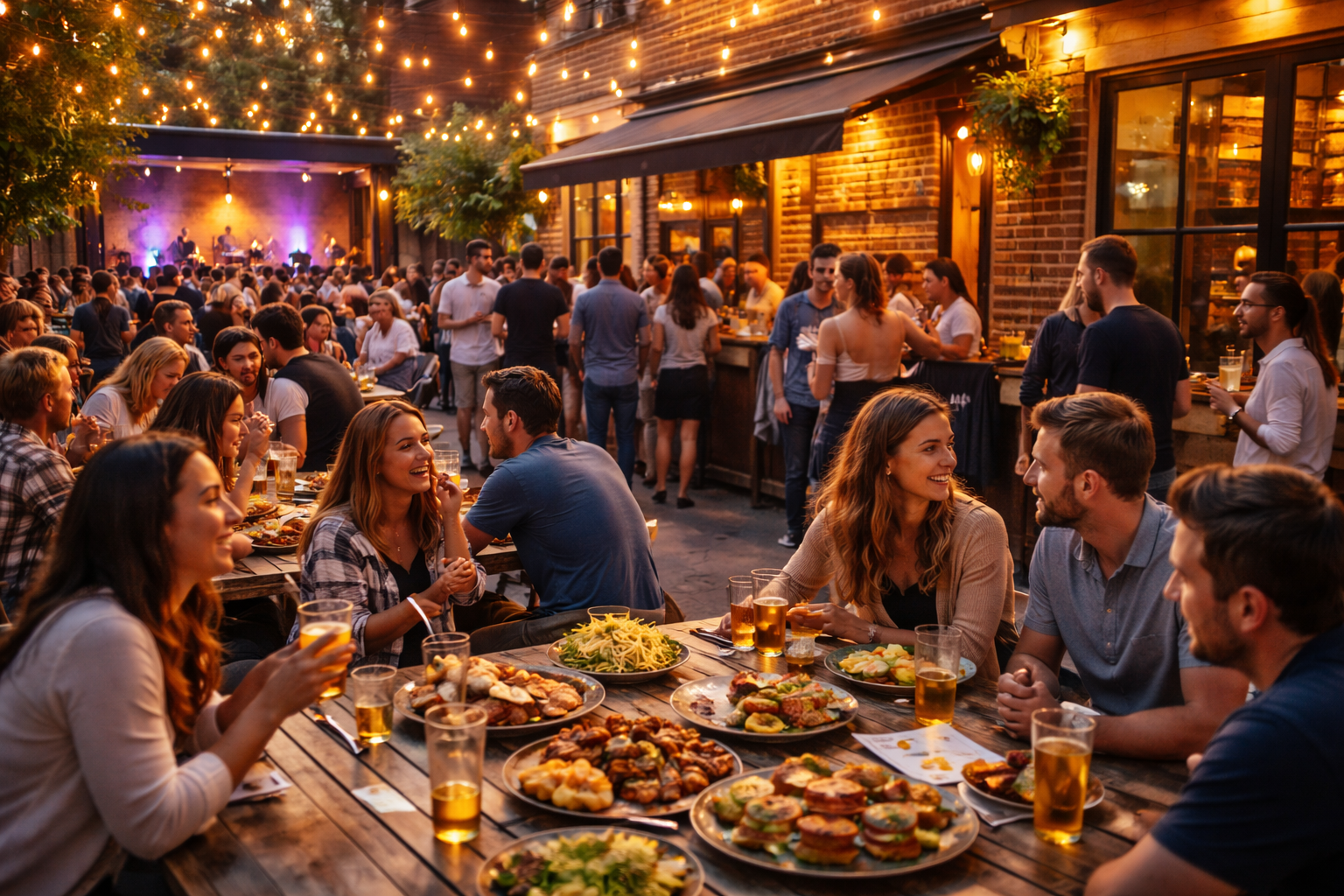
Birmingham’s food and entertainment scene plays a steady role in shaping how the city feels on a daily basis. It does not rely on headline moments or large-scale attractions alone. Instead, it grows through regular events, familiar venues, and the habits of people who live and spend time there. From informal food gatherings to evening events built around music, comedy, or shared meals, these activities influence how residents connect with one another and how the city presents itself from the inside.
Conversations about leisure, local routines, and ways people choose to spend free time often appear across general-interest platforms such as needforslots. These discussions reflect a wider pattern that also applies to Birmingham: people look for accessible experiences that fit into their schedules, budgets, and social lives. Food and entertainment sit at the centre of that search, shaping local culture in practical, visible ways.
Food as a daily social anchor
Food in Birmingham functions as more than sustenance. It acts as a social anchor that brings people together across neighbourhoods. Eating out does not always mean formal dining. Many residents build routines around casual meals, shared tables, and places where conversation matters as much as what appears on the plate.
This approach shows through:
- frequent visits to neighbourhood eateries
- informal gatherings built around food
- repeat visits that strengthen familiarity
Food spaces become meeting points rather than destinations.
Entertainment as part of everyday rhythm
Entertainment in the city blends into everyday life rather than standing apart from it. Events happen throughout the week, not only at weekends. This regularity allows people to participate without major planning.
Common forms of everyday entertainment include:
- small live performances
- themed evenings
- community-focused events
These activities add structure to the week and encourage routine participation.
Venues as shared spaces
Venues play a key role in shaping local culture because they act as shared spaces. People return to the same places, recognize familiar faces, and develop a sense of belonging.
Venues influence culture through:
- consistent programming
- approachable atmospheres
- predictable schedules
Over time, these spaces become part of personal routines.
Accessibility over exclusivity
One defining feature of Birmingham’s food and entertainment scene lies in accessibility. Many events and venues lower barriers to entry through simple formats and clear communication.
Accessibility appears through:
- reasonable pricing
- casual environments
- flexible attendance
This approach supports wider participation across age groups and backgrounds.
Events that reflect local habits
Local events often mirror the habits and interests of residents. Rather than chasing novelty, organizers focus on what works within the city’s pace.
These events usually:
- align with working hours
- take place near residential areas
- encourage repeat attendance
The result feels familiar rather than distant.
The role of neighbourhood identity
Different neighbourhoods contribute distinct elements to Birmingham’s cultural mix. Food and entertainment reflect these local identities without separating them from the wider city.
Neighbourhood identity shows through:
- locally themed events
- menus shaped by resident preferences
- informal community involvement
These elements strengthen attachment to place.
Community engagement through shared experiences
Community engagement grows naturally through shared experiences. People connect through repeated attendance rather than one-time events.
Engagement develops via:
- conversations before and after events
- shared tables and seating
- informal networks
These interactions build trust over time.
Food events as low-pressure gatherings
Food-focused events often provide low-pressure ways to meet others. They remove expectations tied to formal social settings.
Such events support:
- spontaneous participation
- casual interaction
- relaxed pacing
Food becomes a social tool rather than a focal point.
Entertainment and routine social life
Entertainment supports routine social life by offering predictable outlets for connection. People plan around familiar schedules rather than special occasions.
This routine includes:
- weekly events
- recurring formats
- stable locations
Regularity encourages participation without effort.
Influence on local schedules
Food and entertainment influence how residents structure their time. Certain days become associated with specific activities.
These patterns shape:
- evening plans
- weekend habits
- social calendars
Over time, these routines define local culture.
Informal networks and word of mouth
Information about events often spreads informally. People share recommendations through conversations rather than formal promotion.
Word of mouth thrives because:
- trust already exists
- experiences feel relatable
- repetition reinforces interest
This organic spread strengthens community ties.
The balance between familiarity and variety
Birmingham’s scene balances familiarity with gradual change. New ideas appear, but they usually fit existing patterns.
This balance allows:
- comfort for regular attendees
- curiosity without pressure
- steady cultural growth
Change feels manageable rather than disruptive.
Food as cultural expression
Food reflects cultural expression through everyday choices rather than formal statements. Menus adapt to preferences shaped by local habits.
This expression appears through:
- menu flexibility
- shared influences
- practical adaptations
Food culture stays grounded in daily life.
Entertainment formats that encourage interaction
Many entertainment formats encourage interaction rather than passive observation. People talk, move, and respond.
Interaction appears through:
- audience participation
- shared seating
- informal timing
These formats support connection.
Inclusivity through informal structure
Informal structures support inclusivity. People feel welcome without needing specific knowledge or preparation.
Inclusivity grows when:
- events remain approachable
- expectations stay clear
- participation feels optional
This openness shapes local culture.
Economic impact at a local level
Food and entertainment support local economic activity in small but consistent ways. Regular attendance sustains venues and events.
This impact includes:
- stable foot traffic
- repeat customers
- local employment
Economic effects remain tied to community habits.
Comparing food and entertainment roles
| Aspect | Food-focused spaces | Entertainment-focused spaces |
| Frequency of visits | High | Moderate to high |
| Social interaction | Continuous | Event-based |
| Planning required | Low | Low to moderate |
| Community impact | Steady | Periodic |
Both contribute differently but complement each other.
Adaptation to changing lifestyles
As lifestyles change, food and entertainment adapt. Shorter attention spans and tighter schedules influence formats.
Adaptation includes:
- shorter events
- flexible timing
- simplified concepts
These changes support ongoing engagement.
Shared responsibility for atmosphere
Atmosphere does not depend solely on organizers. Attendees shape it through behaviour and participation.
Shared responsibility appears through:
- respectful interaction
- repeat attendance
- informal feedback
This shared role strengthens community ownership.
Cultural continuity through repetition
Repetition creates cultural continuity. Events that return regularly build recognition and expectation.
Continuity develops through:
- recurring themes
- stable venues
- familiar formats
These elements anchor local culture.
The role of evenings in social life
Evenings hold particular importance. They provide space for social interaction after daily responsibilities.
Evening activities include:
- casual meals
- small performances
- social gatherings
These moments define how people unwind.
Generational overlap in participation
Different age groups often share the same spaces. This overlap encourages broader understanding.
Generational overlap happens through:
- accessible formats
- mixed audiences
- shared interests
Local culture benefits from this mix.
Food and entertainment as cultural memory
Over time, repeated experiences form cultural memory. People associate places with moments and conversations.
Cultural memory grows through:
- shared stories
- familiar settings
- repeated visits
These memories strengthen attachment to the city.
Looking ahead at Birmingham’s local scene
Birmingham’s food and entertainment scene will likely continue to grow through steady participation rather than dramatic shifts. Residents value familiarity, access, and connection.
Future patterns may include:
- continued focus on local engagement
- flexible event formats
- sustained interest in shared experiences
Local culture will remain shaped by everyday choices.
Conclusion
Birmingham’s food and entertainment scene shapes local culture through regular events, approachable venues, and consistent community engagement. These elements influence how residents spend time, form connections, and understand their city. Food provides daily social anchors, while entertainment adds structure and variety to routines. Together, they create a cultural environment rooted in participation rather than spectacle. This steady, grounded approach explains why local food and entertainment continue to define how Birmingham feels, not just how it looks.