
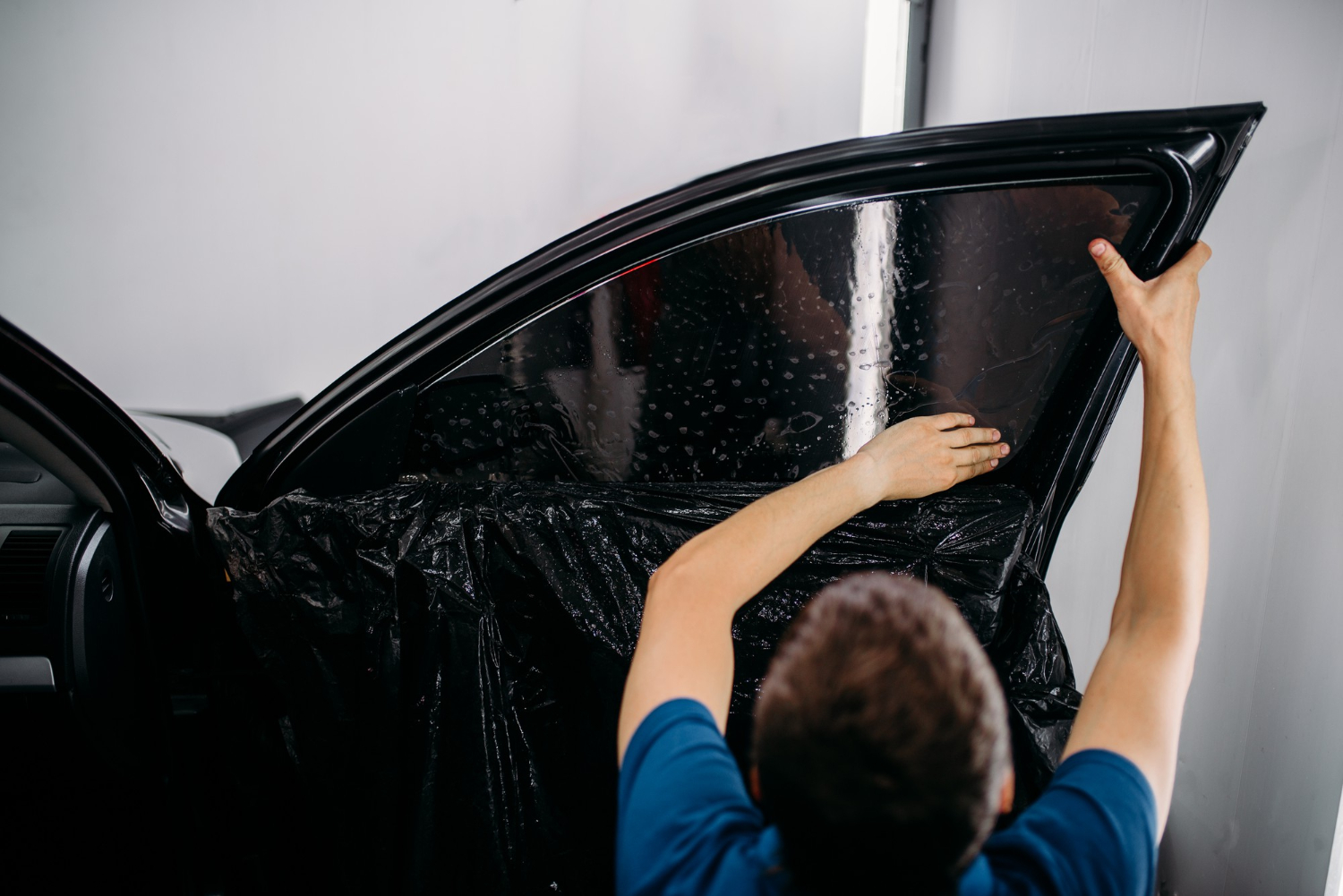
Image source here.
A low-grade tint is an absolute menace. Not because it won’t last. That’s expected. Not because it won’t do what it claims. That’s a given. The real problem is that it lures unsuspecting customers into a false sense of security. They think, “This looks good,” unaware of the damage it can cause to comfort, visibility, resale value, and even your health.
In this blog post, we’ll break down how to spot a low-grade film early on and save yourself from the trouble.
What Makes Tint “Low-Grade” Anyway?
It mostly comes down to the quality of materials used in car window tinting. Cheap tints are usually made from dyed polyester films. They look alright at first, but the dye breaks down quickly under sunlight.
High-quality films like ceramic or carbon, which cost more upfront, are better across the board. They reject more heat, block UV rays, and won’t fade into that awful purple.
1. It’s Turning Purple
If it’s purple, that’s a red flag. It means the dye is breaking down and there’s no fixing it. A fading tint is a failing tint.
2. Bubbling or Peeling
Look for air pockets or curling at the edges. This isn’t just a cosmetic issue. It usually means poor adhesive or bad installation. Bubbles can lead to full-on peeling.
3. It Scratches Too Easily
Quality films have a protective top coat. If yours scratches just from brushing up against a zipper or being wiped with a soft cloth, it’s probably low-grade.
4. No Heat Reduction
Not all tints are built to block heat. If your car still feels like an oven despite having dark windows, you didn’t get proper heat-rejecting film. You got tinted plastic.
5. Poor Visibility at Night
People often assume all tints reduce nighttime visibility. That’s not entirely true. Only low-quality films hurt clarity. If your vision drops significantly at night, the film might be the problem. A little dimming is expected. Anything more is a concern.

Why This Matters in Birmingham
If you’re looking for window tinting in Birmingham, odds are you want relief from the hot, humid summers and glaring sun. But Birmingham also gets chilly winters. That swing in weather is rough on your car’s tint.
Imagine driving through fog with haze-covered windows because your tint is delaminating. Or scratching your film while trying to clear it because the surface wasn’t designed to last.
In Birmingham, window tinting isn’t just a cosmetic choice. It’s a functional one.
What to Ask Before You Get Tint Installed
Don’t just ask about how dark the tint is or how much it costs. Ask the real questions:
- What kind of film are you using?
- Is it ceramic, carbon, or dyed?
- Does it block UV and infrared?
- Is there a warranty?
- Who’s installing it, and are they certified?
Better Alternatives: Ceramic Films
Ceramic films sit at the top of the window tinting food chain, being the latest and greatest of current times. They don’t fade, don’t bubble, and offer serious heat and UV rejection. Even in lighter shades, they block more heat than most dark-dyed tints. That means your cabin stays cooler, your skin stays protected, and your interior lasts longer.
The best part? They do not sacrifice visibility on any level. Sure, they are an investment, but it is one that pays off every time you take your ride out for a spin.
Conclusion
Can cheap tint damage your car? Short answer: yes. Over time, bad film can trap moisture, warp windows, and even etch into the glass if the adhesive breaks down. That happens more often than you think. Try peeling it off, and you might damage your defroster lines or window electronics. That’s a costly fix. It can also mess with visibility. And we don’t need to explain why that’s a problem.
A low-grade tint might look decent for a few months. But that’s about all the lifespan it has. When the damage starts, you’re left paying to replace the film and fix whatever it broke.
Choose a high-quality tint from the start. Look for products that come with a warranty. That’s the sign of a company that believes in what it sells.