
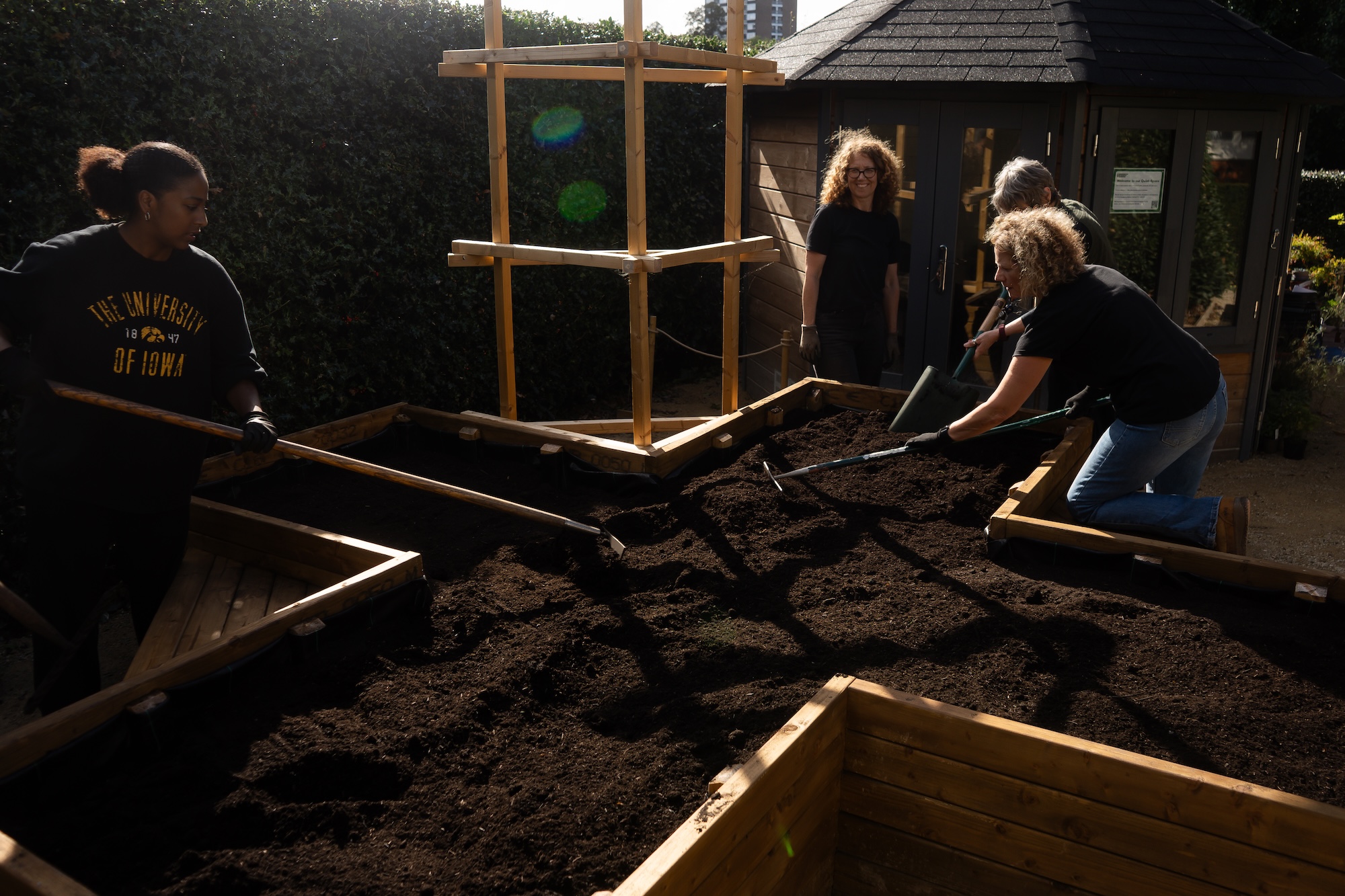
Work has begun on a brand-new Physic Garden at Birmingham Botanical Gardens in partnership with Birmingham City University (BCU), which aims to blend history and heritage with 21st century horticulture and design.
The result of a year-long design project, the Physic Garden has been a collaborative endeavour involving BCU departments across Architecture, Fashion and Textiles and Jewellery, who have worked alongside the Birmingham Botanical Gardens Horticultural and Engagement teams. It started with the question: ‘what could a 21st century Birmingham Physic Garden look like?’ before both organisations set out to create the brand-new bespoke area.
The project is being headed up by the botanic gardens’ Head Gardener, Bethan Collerton, and led by BCU colleagues including Caroline Raybould, Senior Lecturer in Fashion Business and Promotion, and Dr Sian Hindle, Senior Lecturer in History of Jewellery, after first being designed by Dr Mike Dring, Senior Lecturer in Architecture.
In 2025, BCU staff and students took part in a day-long Design Challenge at the Gardens to imagine what a 21st Physic Garden could look like, which resulted in Dr Dring creating a contemporary, site-specific Garden design in which the shape of the raised beds reflected the architecture of the Grade-II listed Teulon Cottage.
Birmingham-based independent designer makers, Dual Works, were then commissioned to bring the design to life, fabricating and installing the beds and totems for the Garden.
Fast forward to this year, the university’s staff and students recently volunteered their time to lay the first roots in the new garden area.
Once complete, the new Physic Garden will showcase the many ways plants have been used throughout history whilst providing a calming, sensory experience for the Gardens’ visitors, as well as providing an exciting new gathering space for events, workshops and taught sessions.
Plants found in the Physic Garden will focus on medicinal, herbal and dye plants, and each bed will contain types that have different purposes. The medicinal beds will contain a mixture of shrubs and herbaceous perennials, all used historically to treat ailments in different parts of the body. The herbal beds will house oregano, mint, thyme and bergamot amongst other common garden herbs. The dye bed will be used by Birmingham City University’s textiles students to study the plants for upcoming projects.
Physic gardens date back to the 17th century. Often found at monasteries, they were used to grow medicinal plants in an ornamental style and were the predecessor to botanic gardens as they’re known today, housing collections of plants for scientific research and education.
Traditionally, these plants were arranged by their use, often having a medicinal bed, an edible bed and a dye bed, which has been woven into the inspiration behind the project being created in this partnership. Apothecaries and physicians would use the plants to create tinctures and medicines to treat a wide range of ailments. Some modern medicines that are used today are still derived from plants, mostly to treat pain relief and infectious diseases.
Jen Ridding, Head of Engagement and Learning at Birmingham Botanical Gardens, commented: “At the heart of this project is a genuine Birmingham Botanical Gardens commitment to support the creative ecology in the city. The Gardens are an independent charity and a much-loved cultural asset for the city, so we’re part of this ecology too! This project was the perfect opportunity to work with BCU colleagues and students, and commission makers who were local, independent, and collaborative in their approach.
“Through our programmes we activate the Gardens as a site of cross-disciplinary artistic enquiry, supporting the development of new work and enabling new perspectives to emerge. The green spaces of the Gardens are an inspirational creative space in the region which provide unique, interdisciplinary learning and research opportunities for the staff and students at Birmingham City University. We can’t wait to bring the amazing new Physic Garden to life with planting and people!”
Bethan Collerton, Head Gardener at Birmingham Botanical Gardens, added, “The Physic Garden will be a wonderful addition to Birmingham Botanical Gardens, connecting visitors with the fascinating history behind how plants have been used for healing, nourishment and creativity throughout centuries.
“Working alongside Birmingham City University has brought an abundance of insight and fresh ideas to the project, and we’re excited to see the garden develop into a space that is both educational and inspiring.”
Caroline Raybould, Senior Lecturer in Fashion Retail Management at Birmingham City University, said, “This collaboration gives our students a unique opportunity to engage with plants as both a historical resource and a tool for creative practice. The dye bed, in particular, will allow students to explore natural colour production and sustainable textile processes first hand.”
Zoe Roberts, Co-Founder at Dual Works added: “It’s been a real pleasure to be involved in the Physic Garden, particularly because we’ve been able to take ideas developed through the BCU students’ design challenge and help turn them into something tangible. We developed the planters as a modular system, to streamline the fabrication and make the most of the available budget and give the garden a flexible framework for planting and seating. It’s a lovely project for us because of its connection to horticulture, which we’re increasingly working more with.”
The project is part of a wider strategic partnership between BCU and Birmingham Botanical Gardens, which sees the two institutions collaborate on events, research and sustainability initiatives that benefit the wider city.
To find out more on the collaborative partnership between BCU and Birmingham Botanical Gardens, visit: www.bcu.ac.uk/news-events/news/birminghams-youth-to-benefit-as-botanical-gardens-and-bcu-expand-partnership