
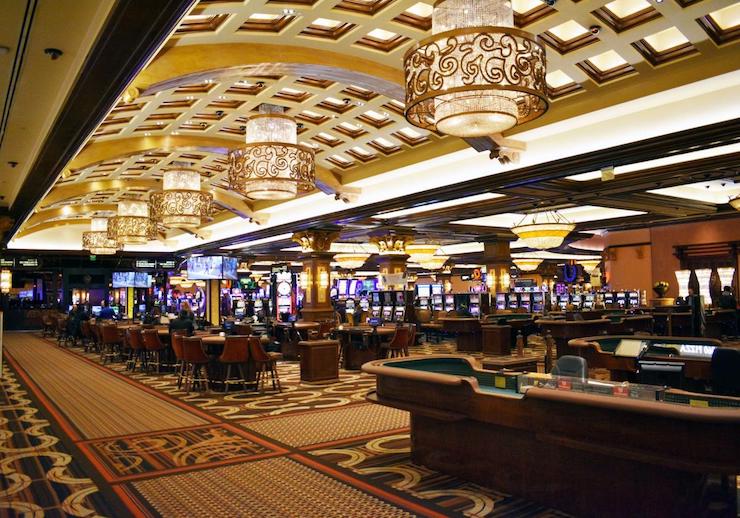
A new stage has begun in Alabama’s gambling industry: a unique digital game management system has been launched in two of the state’s landmark casinos. According to the initiators, this is not just about modernization—players will receive personalized offers and service comparable to the most progressive global standards. Will the ordinary casino visit become a thing of the past, and what will change for guests who are used to traditional gambling entertainment?
The essence and significance of the partnership for gambling in Alabama
The Poarch Band of Creek Indians have become one of the largest employers and investors in the economy of the southern states. Thanks to their initiatives, Birmingham Race Course and Mobile Greyhound Park have found a new lease on life and gained a chance to join the elite of the gambling business. A new stage of development began after an agreement with Acres Manufacturing Co.—a Las Vegas-based company specializing in digital systems for casinos.
A few months ago, when the Poarch Creek Indians officially acquired Birmingham Race Course, representatives announced plans for a large-scale upgrade of infrastructure and client services. As a key innovation, the implementation of Foundation HQ was chosen—a platform capable of taking the guest experience to a new level. Project management emphasizes: the goal is not just to introduce a digital novelty, but to turn the process of visiting a casino into a personal journey for each player.
“We are confident that modern technologies open up unique opportunities for all market participants,” notes PCI CEO Jay Dorris. The company expects a noticeable increase in visitor loyalty and a strengthening of Alabama’s position on the map of major US gaming centers.
How Foundation HQ and PLS 1:1 Loyalty Platform work
The Foundation HQ system is the “brain” of the casino of the future. It closely monitors all player actions, analyzes bets, frequency of visits, game choices, and even reactions to certain offers. The main principle is maximum personalization: each visitor receives special treatment, not standard mailings or mass promotions.
An important place in the system is occupied by the PLS (Player Loyalty System) module, which forms a digital profile of the player. All data—from bet size to time spent in the hall—are used to create an individual offer: bonuses, free credits, invitations to closed events.
Let’s consider a scenario: a guest regularly plays a certain slot machine and spends a certain amount per month. The system detects these patterns and offers them special conditions—for example, participation in a private tournament or increased cashback. For guests, this is similar to the service experience in an expensive hotel: the computer seems to anticipate desires and offers exactly what is needed.
Unlike traditional loyalty programs, where visitors are divided into large categories by bet volume (bronze, silver, gold), the new platform treats each profile individually. This makes it possible to increase response to offers and strengthen the emotional connection with the brand.
Practical consequences of new technologies
Now, to receive bonuses or special conditions, a participant uses a physical loyalty card, which must be inserted into the slot machine. The system instantly analyzes activity and “sends” individual offers not only in the hall, but also through electronic channels.
Among the innovations is the introduction of “historical horse racing”—a special betting format where players can make predictions on the results of past races using archival data. This option allows the excitement of the traditional tote to be preserved, but with new technological capabilities.
What advantages does the guest receive? First, these are regular personalized bonuses and invitations to promotions designed specifically for them. Second, the system has become more flexible in retaining attention—if a player reduces activity, they may be offered an additional incentive to continue playing. Third, the atmosphere has become more interactive: digital systems accompany the visitor at every stage.
At the same time, some experts emphasize possible risks. The transfer of a large amount of personal data requires strict information security. In addition, increased engagement can lead to addiction—it is important for the operator to maintain a balance between commercial interests and a responsible approach to the guest.
The first results and expert assessments of innovation implementation
The large-scale implementation of new platforms has already borne its first fruits. Magic City Casino in Miami, where the Foundation HQ system was tested, recorded an 8% increase in slot machine revenue in the first year after launch. This occurred against the backdrop of declining or stagnant revenues in similar establishments in the region.
Noah Acres, a leading gaming technology specialist from Acres Manufacturing, notes: “A personalized approach allows not only to increase profits, but also to build trust among guests. The future belongs to those who learn to work with data in real time.” According to him, new tools open the way to flexible strategies and create a completely different standard for the gambling business.
Industry analysts also point out that such a model is becoming increasingly popular among establishments seeking to compete with large international networks.
The development of new technologies will change the future of casinos and the market
The management of the Poarch Creek Indians has already announced further modernization of facilities in the state and is exploring new formats of digital service for guests. The trend toward individualization and high-tech solutions is gaining momentum in global practice—today, many casinos in Europe and Asia are implementing similar platforms.
In the context of the global digitalization of the gambling industry, the adaptation of services to the specific financial habits of players is playing an increasingly important role. This is especially noticeable in countries with strict regulation, where the convenience of payments becomes a key factor in choosing a platform.
Similar approaches are actively used in IGaming (online gambling), where users choose platforms focused on local currencies and national standards. For example, in the category of canadian dollars casinos, there are a large number of online casinos that offer the use of Canadian currency.
Such a focus on localization shows that personalization technologies go far beyond a single state or country.
Experts believe that in the coming years, competition in the market will revolve around the quality of personalized service and the speed of innovation implementation. On the one hand, this promises more benefits for guests; on the other, it raises questions about data privacy and the social responsibility of the gambling business.
What awaits players tomorrow? The outlook for the future of gambling promises the emergence of even more advanced algorithms, the integration of artificial intelligence, and the expansion of digital services that are transforming traditional entertainment scenarios.
Important details for understanding and context
The Poarch Band of Creek Indians is an officially recognized indigenous tribe that has managed over the past decades to become one of the largest taxpayers and employers in Alabama. Thanks to their investments, the region has received modern tourist and entertainment facilities, and the state budget—additional revenues.
A feature of the gambling market in Alabama is that classic casinos with a full range of table games are still restricted by law. However, betting and gaming formats, as well as “historical horse racing,” are legalized and popular within the current regulations.
Such personalization technologies are already being tested in the Nevada and New Jersey markets, and in Europe are used in Spanish and British casinos. This confirms a steady international trend toward the digitalization of the gaming experience.
According to visitors, the new service is comparable to individual service in the best hotels: every element of the stay becomes adapted to the guest’s desires and habits. How the industry will change in five years remains an open question that concerns both players and market experts.