
People judge a home from the curb long before they ever step inside. Within seconds, they have taken in the lawn, the planting beds, the trees, and the path to the door, and that snapshot colors how they see everything else. A worn-out yard can make a solid house look neglected, while a well-kept one gives even a modest home a cared-for feel.
That gap is why so many homeowners eventually call in a professional. Good landscaping goes well beyond mowing and a few shrubs. It takes planning, plant knowledge, and steady upkeep that most busy households struggle to fit in around work and weekends.
Here is how professional landscaping improves the way a home looks, from the first design decisions to the seasonal care that keeps the results fresh, and why the changes tend to last.
1. Boosting Curb Appeal from The Street
Hiring a local landscaping company is one of the quickest ways to lift a home’s curb appeal. Crews that work in the same area know which plants, edging styles, and care schedules suit nearby yards, so the front of the house gets a finished look that is hard to match on a spare weekend. Sharp edges, dense grass, and trimmed shrubs are the details most homeowners skip when they do the job themselves.
So, for instance, if you live in Bear, Delaware, choosing a crew that offers landscaping in Bear means the plan is built around local soil, weather, and the look of nearby neighborhoods. That local knowledge cuts down on guesswork and keeps the results consistent from one season to the next.
Realtors can tell the difference. According to a 2023 survey conducted by the National Association of Realtors and the National Association of Landscape Professionals, 92% of Realtors recommend enhancing curb appeal before listing a property, and landscape maintenance was the most frequently recommended project at 74%. Front-yard landscaping is one of the most cost-effective ways to change the first impression.
2. Designing a Layout That Fits the Whole Property
A good garden begins on paper. The designer assesses the sunlight, slope, property layout, and how the family uses the garden space before planting any plants. This planning ensures that the garden does not end up as a jumble of purchased items.
The layout also dictates the path of the viewer’s eye. A curve in the garden bed softens an angular edge, while a strategically placed walkway guides visitors right to the front door.
Such decisions are inexpensive during planning but very expensive to correct later. A plan also allows for phased implementation, enabling the homeowner to pay for the project in installments without the garden appearing unfinished.
3. Choosing Plants That Suit Local Conditions
The selection of plants will make or break the appearance of the yard over time. Experts consider the soil type, amount of light, and local climate to ensure their plantings look lush rather than spotty halfway through summer. Native plants require less water and fewer pest treatments than many non-natives, which makes them a practical backbone for a Delaware yard.
Combining native plants with well-behaved ornamentals provides seasonal color in the garden. The experts know which popular plants are invasive and avoid them as well.
Proper staggering of blooms is important, too, since the planting that looks good in May will look sad and spotty in August. The creation of layers with low-growing ground covers, mid-sized perennials, and a few large shrubs provides depth in the planting through all four seasons.
4. Adding Shade and Structure with Well-Placed Trees
Trees give a landscape its backbone. Set in the right spot, they frame the house, soften the roofline, and shade the south and west sides that take the brunt of the afternoon sun. That shade keeps outdoor seating areas comfortable and takes some of the heat off the house in summer.
A professional also thinks about the mature size. A sapling planted too close to the foundation looks fine on day one and becomes a problem a decade later. Evergreens on the windward side add year-round structure, so the yard still has shape in January when the beds are bare.
5. Defining Edges, Beds, and Walkways
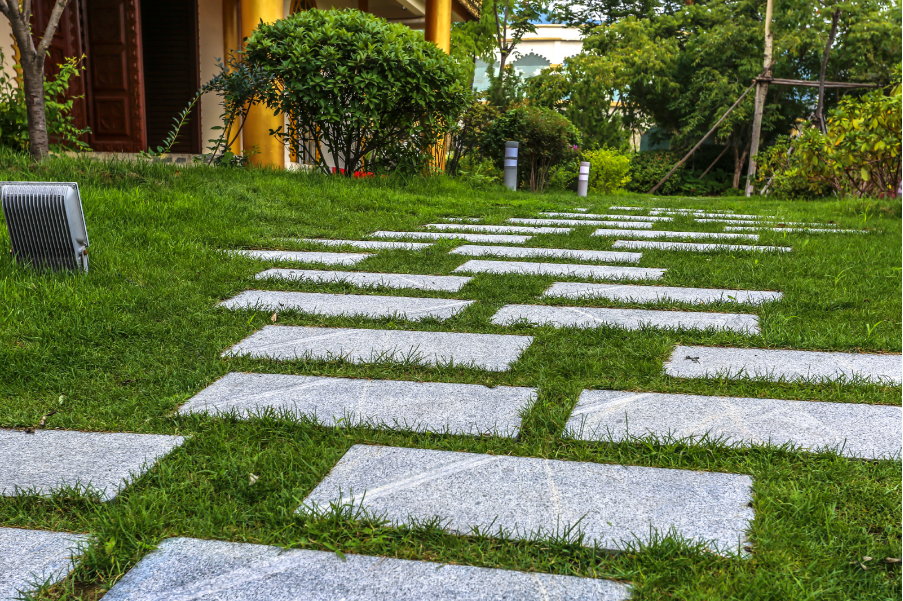
Edging and hardscape define a yard space. Stone edging, mulched beds, and clearly defined spaces for lawn vs. planting zones separate a space from itself, creating distinct areas within a property.
A simple pathway can alter a front-yard experience. Path lighting is an additional step in creating an inviting front yard space by adding a small number of low-light fixtures to illuminate the pathway at night.
Mulch performs more quietly. A new layer of mulch darkens the beds, suppresses weed growth, and brings out plantings. It is typically applied each spring as part of the cleanup process for the beds.
6. Keeping Everything Tidy Through the Seasons
A landscape only looks good if somebody keeps it up. Regular mowing at the right height, pruning at the right time of year, and spring and fall cleanups prevent small problems from piling up.
Weekend effort rarely matches the consistency of a scheduled crew. Fertilizing and weed control fit into the same routine, which keeps the turf thick enough to crowd out problems before they spread.
That consistency is the real advantage. A yard trimmed every week never reaches the overgrown stage, so the home looks cared for in July and in October alike.
Bottom Line
Professional landscaping improves a home’s appearance through a chain of choices: a thoughtful layout, plants suited to the site, trees that frame the house, clean edges, and consistent upkeep. Each one adds to the first impression, and together they make a property look settled and well cared for.
For homeowners weighing the cost, the payoff is a yard that keeps looking good with far less personal effort, and a house that makes a stronger impression every time someone pulls up to it.