
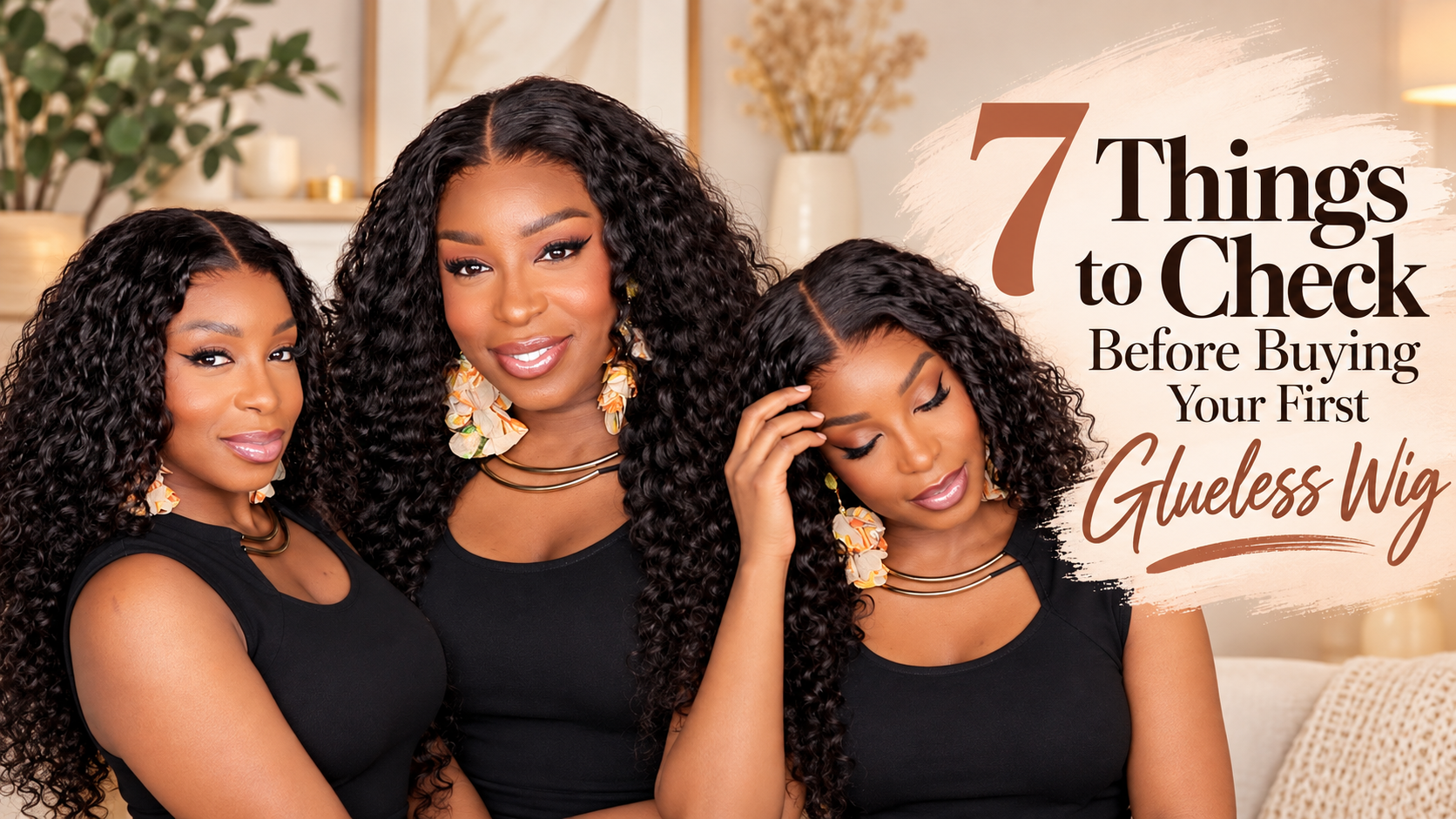
Buying your first glueless wig should be exciting. You get to experiment with a new hairstyle, explore different textures, and enjoy the possibility of changing your look without committing to a permanent cut or colour.
But once you start shopping, things can get confusing.
One wig promises an invisible hairline. Another claims to be ready to wear straight out of the box. You’ll see terms like HD lace, pre-plucked, pre-cut lace, adjustable cap, and 180% density—often without a clear explanation of what they mean for everyday wear.
And if you’ve never worn a wig before, it’s difficult to know which features actually matter.
The good news is that you don’t need to become a wig expert before making your first purchase. You just need to know what to check.
Here are seven things worth looking at before buying your first glueless wig.
1. A Secure Fit That Doesn’t Depend on Glue
The first thing to understand is that “glueless” describes how a wig is intended to be secured, not a guarantee that every wig will fit every person perfectly.
Glueless wigs may use adjustable straps, elastic bands, combs, or other built-in securing features to help hold the cap in place.
Some designs combine several of these features.
Before purchasing, look closely at the interior cap construction.
Does the product have an adjustable band? Are there straps at the back? Does the seller explain how the wig stays in place?
These details matter more than a simple “no glue needed” label.
A wig that’s too loose may shift during normal movement. One that’s excessively tight can create uncomfortable pressure around the temples or nape.
For your first wig, prioritise a construction that allows you to adjust the fit without having to pull the cap uncomfortably tight.
And remember: secure shouldn’t mean painful.
2. A Lace Front That Actually Looks Natural
A realistic hairline can make a huge difference to how confident you feel wearing a wig.
That’s why lace construction deserves careful attention.
Lace-front wigs use a lace section at the front to create the appearance of hair emerging from the scalp. When the lace is properly positioned and blends with the skin, the transition can look much softer than a conventional hard-edged cap.
For beginners, glueless lace front wigs can be an appealing option because they combine a natural-looking front hairline with a construction designed to reduce reliance on adhesive.
However, not all lace fronts are identical.
Pay attention to the lace colour, transparency, hairline density, and whether the knots are visible.
HD lace is often finer and more transparent than standard lace, but it may also require more delicate handling.
Pre-plucked hairlines can help create a softer transition, while pre-cut lace may save you the trouble of trimming the front yourself.
None of these features guarantees a completely invisible hairline. The result still depends on fit, placement, lighting, and the quality of the construction.
3. The Right Cap Size for Your Head
One of the easiest mistakes to make when buying a first wig is assuming that “average size” means it will automatically fit.
Head shapes and measurements vary.
Even two people with similar head circumferences may have different forehead shapes, crown contours, and ear positions.
Before ordering, measure your head according to the seller’s sizing instructions.
Typically, you’ll need to measure around the hairline and the nape, although some brands provide additional measurements.
Compare your results with the specific product’s size chart rather than relying on a general wig-sizing guide.
If you’re between sizes, contact the seller for advice.
Adjustable straps can help fine-tune a suitable cap, but they can’t always compensate for choosing the wrong size.
It’s also worth checking the return or exchange policy before purchasing, especially if you’re uncertain about fit.
A comfortable cap is one of the most important foundations of a good wig-wearing experience.
4. Hair Type and Texture That Match Your Routine
A beautiful hairstyle in a product photograph isn’t necessarily the best choice for your lifestyle.
Think about how much time you’re willing to spend washing, detangling, styling, and maintaining the hair.
Human hair wigs generally offer greater flexibility for heat styling and changing hairstyles, although they still require appropriate care.
Synthetic wigs may hold their original style more consistently and can be convenient for some wearers, but their heat-styling options depend on the fibre.
Texture matters just as much as hair type.
Straight hair may be easier to brush and restyle into sleek looks. Body wave hair can offer movement and volume. Curly textures can create a fuller appearance but may require more careful detangling and moisture management.
If you’re new to wigs, don’t choose a complicated texture simply because it looks impressive on a model.
Choose something you’ll enjoy maintaining on an ordinary Tuesday morning.
5. Hair Density That Suits the Look You Want
Wig density describes how much hair is distributed across the cap.
You’ll often see percentages such as 150% or 180%, but these figures aren’t always measured consistently between sellers.
Higher density generally means a fuller appearance, but more hair isn’t automatically better.
A very dense wig may feel heavier, take longer to dry, and require more effort to style.
It can also create an overly bulky silhouette if the fullness doesn’t suit the haircut or your preferences.
For a first wig, consider the appearance you’re hoping to achieve.
Do you want a natural everyday style that resembles your own hair? Or are you looking for dramatic volume for special occasions?
Remember that curly and textured hair can appear fuller than straight hair even at similar advertised densities.
Product videos showing the hair in motion are often more informative than density percentages alone.
The best density is the one that gives you the appearance you want without making the wig unnecessarily difficult to manage.
6. Realistic Maintenance Requirements
One of the biggest misconceptions about glueless wigs is that they require no maintenance.
Avoiding adhesive may simplify installation and removal, but the hair and cap still need regular care.
Human hair wigs can become dry or tangled without appropriate washing, conditioning, and storage.
Lace needs gentle handling, particularly around the hairline.
Elastic bands and adjustable components should also be checked for wear over time.
Before buying, ask yourself a few practical questions.
How often will you wear the wig? Are you comfortable detangling it regularly? Do you have suitable products and somewhere to store it?
If you’re planning to wear it every day, durability and ease of care may matter more than an elaborate hairstyle.
Look for sellers that provide clear washing instructions and realistic guidance on maintenance.
Be cautious of claims that a wig will remain perfect indefinitely or require virtually no care.
Even good-quality human hair needs attention.
7. Clear Product Information and a Trustworthy Buying Experience
A wig can have attractive photographs and impressive specifications while still leaving important questions unanswered.
For a first purchase, product transparency matters.
Look for clear information about cap construction, hair type, length, density, lace area, and any pre-customised features.
Customer photographs and videos can also help you understand how the wig looks outside professional studio lighting.
Before settling on a style from WowAngel, take a closer look at the cap construction, lace coverage, and available customer photos. A beautiful product image can catch your attention, but these details will tell you much more about how the wig might fit into your daily routine.
Check the exact product specifications, read the available reviews critically, and confirm which features are included in the version you’re ordering.
A pre-cut lace option, for example, may differ from another variation of the same style.
Shipping details, customer support, and return conditions also deserve attention.
For a beginner, knowing what happens if the cap doesn’t fit or the product isn’t as expected can be just as important as choosing the hairstyle itself.
A Few Mistakes First-Time Wig Buyers Can Avoid
Even after checking the seven essentials, it’s easy to get distracted by trends.
One common mistake is choosing a very long wig without considering the extra detangling and styling involved.
Another is assuming that a higher density always means higher quality.
Some buyers also focus so heavily on lace transparency that they forget about cap comfort.
And perhaps the biggest mistake is expecting a wig to look exactly like a professionally styled advertisement without any adjustment.
Even a beginner-friendly wig may need its part repositioned, its hair brushed, or its fit adjusted before it looks right on you.
Give yourself time to become familiar with the product.
A little practice can make the wearing experience much easier.
Should Your First Wig Be Glueless?
For many beginners, a glueless wig is worth considering because it can reduce the need to learn adhesive installation techniques immediately.
It may also make daily removal more convenient.
However, whether it’s the best choice depends on your needs.
If you prefer a wig you can put on and remove regularly, an adjustable glueless construction may be appealing.
If you need a particular hairstyle or level of security for demanding activities, you may need to explore additional securing options or different cap designs.
There isn’t one installation method that’s ideal for everyone.
The right choice is the one that balances appearance, comfort, security, and the amount of effort you’re comfortable investing.
Final Thoughts
Your first glueless wig doesn’t need to be the most expensive, longest, or fullest option available.
It needs to fit your head, suit your lifestyle, and give you a hairstyle you feel comfortable wearing.
Start with the essentials: a secure cap, realistic lace front, correct sizing, manageable texture, suitable density, practical maintenance, and transparent product information.
Once those details are right, experimenting with different looks becomes much more enjoyable.
The best first wig isn’t the one that looks most impressive in the box.
It’s the one you can put on, wear comfortably, and feel confident stepping out in.